


A homeowner discovered their lawn killed within 24 hours, turning blackish in stripes with no distinct odor. The grass lifted easily without roots. Police declined to test the grass, suggesting the homeowner contact an expert.
The immediate effect and lack of solvent smell rule out petroleum products. The pattern of damage around a tree suggests someone walked and poured from a watering can. The symptoms match a corrosive agent like muriatic acid. An Extension Master Gardener replicated the damage with muriatic acid: grass turned brown immediately, gray within three hours, and black by the next morning. The acid odor persisted and caused stinging on contact even after rain.
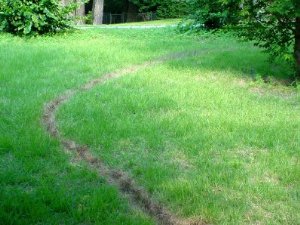
Initial damage #1
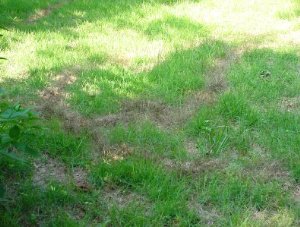
Initial damage #2
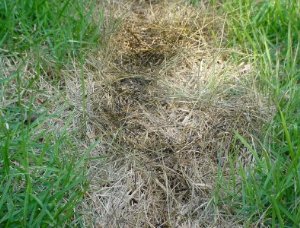
Closeup of damage
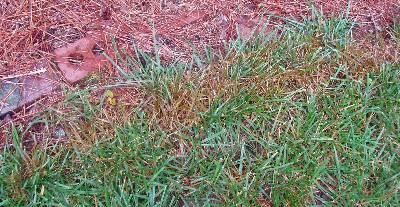
Mary Kay's initial damage from muriatic acid
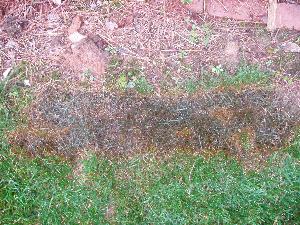
Closeup of Mary Kay's muriatic acid damage
Identifying the exact chemical is costly and often fruitless; labs need to know what to test for. Instead, document every interaction with the suspected neighbor. For a low-cost indicator, submit a soil sample to your local Extension office (404-897-6261) for a pH test ($7–$10). A sharply low pH would support acid damage.
St. Augustine Frost Damage Recovery: Patience, Fungus Watch, and Delayed Fertilization
New Construction Lawn on Clay: Topsoil Import Beats Soil Conditioning
Fertilizer Overdose? Go Organic to Rebuild Soil Health
Crabgrass After Fertilizer Burn: Wait and Pre-Emergent
Choosing the Best Self-Propelled Lawn Mower: Expert Insights and Eco-Friendly Alternatives
Lightning Strike on Oak: Assessment and Care
Purple Streaks in Centipede Lawn: Traffic Stress, Not Disease
How to Revive Fertilizer-Burned Bermudagrass and Safer Lawn Care Alternatives
Humane Mole Control for Vegetarians: Repellents and Trapping Realities
Ammonia-Detergent Lawn Tonic: Unproven, Grub Control Needs ID First
Rapid Tall Fescue Death on Imported Clay: Sod, Soil, or Application Failure?
Car Fire Destroyed Lawn: Intense Heat + Toxins May Require Soil Replacement
Internal Decay from Tree Impact Injury: Gelatinous and Spongy Fungal Masses in Oak
Copyright © www.100flowers.win Botanic Garden All Rights Reserved