


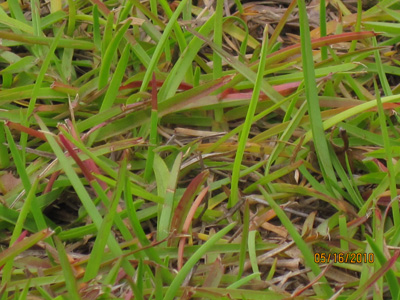
Those purple streaks appearing after mowing your centipede lawn are a classic sign of traffic stress. The grass produces anthocyanin pigments—the same compounds that color autumn leaves—in response to compaction from mower tires.
Vary your mowing pattern each time you cut. Mow at right angles to previous tracks and avoid mowing when the grass is drought-stressed. The discoloration is temporary and will disappear as new growth replaces the stressed blades.


Mysterious Holes in Lawn: Wildlife Foraging, Not Disease
New Lawn Care in NJ: Skip Crabgrass Preventer, Target Grubs in June
Golf-Ball-Sized Lawn Holes in Michigan: Voles or Collapsed Mole Tunnels?
Centipedegrass Seed Heads: Low Viability, Buy Seed Instead
Centipede Grass Thinning in Shade: Fescue May Still Struggle
Identifying Lawn Tunnels: Moles vs. Voles in Virginia
Reviving a Failed Fescue Lawn in Red Clay: Soil Prep, Seeding Timing, and Maintenance Schedule
Pruning Dead Top of Fir Tree: Cut Below Damage
New Marathon Fescue Sod Problems in Ojai, CA: Diagnosis and Fixes
St. Augustine Frost Damage Recovery: Patience, Fungus Watch, and Delayed Fertilization
Diagnosing Unusual Lawn Fungi in Cool Climates: When to Seek Expert Identification
Does Sugar Benefit Centipede Grass? Exploring Soil Chemistry Connections
Copyright © www.100flowers.win Botanic Garden All Rights Reserved