


Those swollen, gnarled nodules on your cantaloupe and melon roots are the hallmark of root-knot nematodes (Meloidogyne spp.), microscopic roundworms that feed on plant roots.
Dig up a struggling plant and examine the roots. Root-knot nematodes cause distinctive galls (swellings) that are integral to the root tissue, unlike nitrogen-fixing nodules on legumes which are loosely attached. Infected plants are stunted, wilt easily, and yield poorly.
There are no chemical nematicides for home gardens, but you can reduce damage:
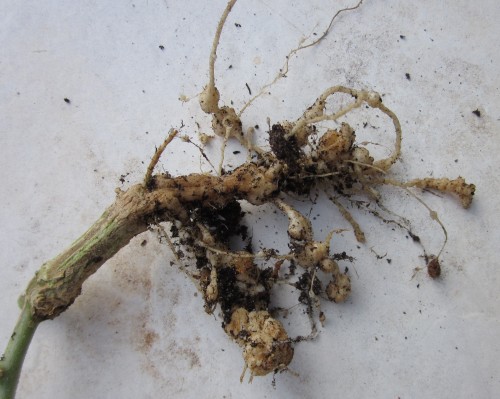
Root-knot nematode damage
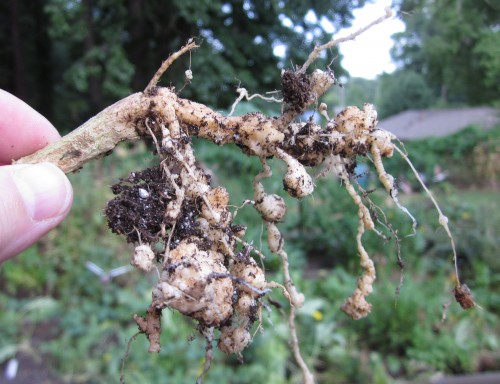
Root-knot nematode damage
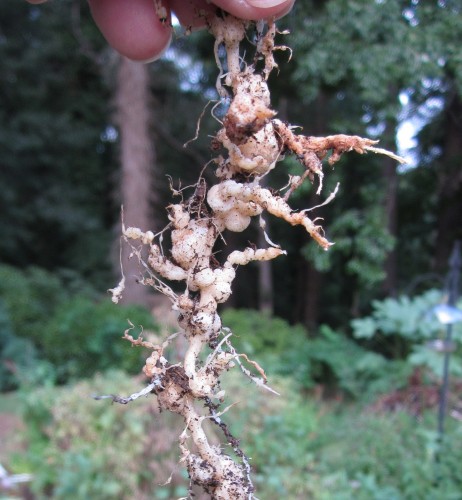
Root-knot nematode damage
Persistence and soil health are your best tools against this persistent pest.
Diagnosing Patchy Dieback in Established Vinca Minor Groundcover
Tomato Wilting: Root Diseases, Nematodes, and Why Crop Rotation Matters
Root Mealybugs on Heliconias: Organic Rescue Plan for a Contaminated Patio
Pink/Red Phalaenopsis Root Tips: Normal or Overfeeding?
Sarracenia Pot Size Management: Space Efficiency vs. Plant Size
Golden Euonymus Establishment: Root Prep and Watering Trump Fertilizer
Planting Pygmy Sundews: Terrarium Myths and Minimalist Approach
Pale Pitcher Plant (Sarracenia alata) Bog Garden Depth and Soil Mix for Florida
Plants That Root Easily in Water: Coleus, African Violets, Impatiens
Bare-Root Trees and Shrubs: Smarter Shipping, Faster Establishment
Growing Veronicastrum (Culver's Root): Elegant Native for Moist Meadows
Copyright © www.100flowers.win Botanic Garden All Rights Reserved