


That fuzzy, bee-like insect with a long proboscis and fly-like wings visiting your flowers is a bee fly (family Bombyliidae). Though they resemble bees, they are true flies and valuable pollinators.
Bee flies have stout, hairy bodies, often with bold patterns. Their wings are held outstretched at rest, unlike bees which fold them over the abdomen. They hover expertly while feeding on nectar. Females flick their eggs into the nest burrows of solitary bees and wasps; the larvae then parasitize the developing host larvae.
As adults, bee flies pollinate a wide range of flowers, especially early spring blooms. Their parasitic larvae help control populations of ground-nesting wasps, including cicada killers. They are harmless to humans and a sign of a diverse insect community.
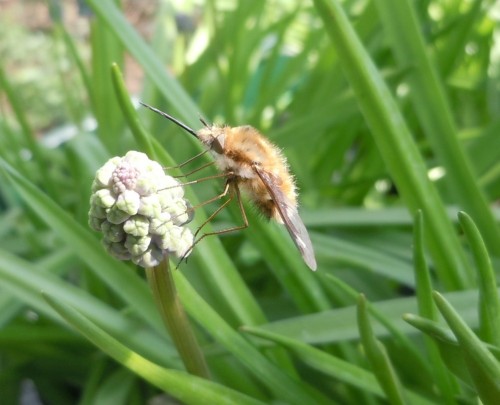
Bee fly

Bee fly
Welcome these fascinating insects to your garden by planting a diversity of native flowering plants.
Golden Larch vs. Common Larch: Clearing Up the Confusion
Society Garlic: Seed Collection and Deer Resistance
Lanceleaf Greenbriar: Thornless Vine with Edible Shoots
Barred Owl: The "Who Cooks for You?" Hunter
Bloody Dock (Rumex sanguineus): Ornamental or Invasive?
Creasy Greens: The Spring Tonic Wild Cress
Turtlehead (Chelone lyonii): Native Perennial for Damp Shade
Possum Grape (Ampelopsis cordata): Colorful Vine, Weedy Habit
Longleaf Pine: From Grass Stage to Bottlebrush
Rosinweed (Silphium compositum): Taprooted Native Perennial
Bot Fly Larva in a Mouse: Identification and Life Cycle
Identifying Black Cherry Trees in the Landscape
Copyright © www.100flowers.win Botanic Garden All Rights Reserved