


Finding a strange object emerging from a dead mouse can be unsettling. Based on the description and photos, the culprit is almost certainly a bot fly cocoon (family Cuterebridae). These parasitic insects begin as adult flies that lay eggs near areas frequented by small mammals. When an animal brushes against the eggs, they hatch and the tiny larvae burrow under the skin, creating a noticeable swelling as they grow.
The larva develops inside the host, breathing through a small opening in the skin. Eventually, it emerges—pushing through the skin to drop to the ground and pupate. The "object" seen in the photo is likely the posterior end of the mature larva protruding from the mouse's body, or the empty pupal case left behind after the adult fly has emerged. This is the stage at which the mouse was found.
While gruesome, this is a natural part of the bot fly's life cycle. The mouse likely succumbed to the infestation or other causes; the trap may have been a quicker end. For comparison, similar infestations occur in squirrels and other rodents.
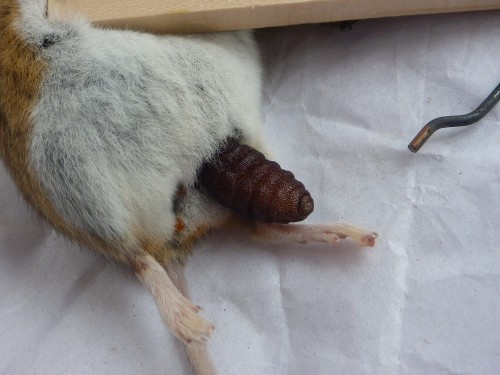
Bot fly cocoon in mouse

Squirrel afflicted by bot fly
Smart Mouse Evades Traps: More Traps, Better Placement
Crane Fly Larvae Control in Outdoor Bog Gardens
Managing Whitefly and Sooty Mold on Dwarf Plumeria: Persistent Horticultural Oil Treatment
Venus Fly Trap: Carnivorous Wonder for Curious Growers
How to Tell Rat Droppings from Mouse Droppings
Do Rat Poisons Prevent Odor? The Truth About Rodenticides
Fly Control: Forget Black Powder, Use Flypaper and Eliminate Breeding Sites
Condo Fly Problem: Cluster Flies vs. Green Bottle Flies
Midge Fly Swarms Near Water Treatment Plant: Source Control Required
Scat Identification: Long Droppings from Narrow Gap
Persistent Drain Flies: Seal Drains, Rule Out Fungus Gnats, Check for Slime
Dealing with Flying Black Bugs in Your Pantry: Identification and Control
Aphids on Venus Flytraps: Safe Treatment Options
Identifying a Mis-sold Plant: Why This Is Not a Venus Flytrap
Copyright © www.100flowers.win Botanic Garden All Rights Reserved