


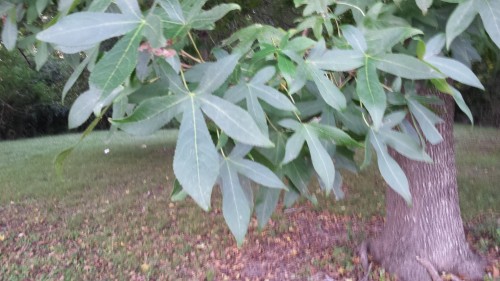
A homeowner in southern Alabama found a tree with sweetgum-like leaves but unusually deep lobes—and no "gumballs" (spiky fruit) underneath. They were convinced it wasn't a sweetgum. The verdict? It is a sweetgum (Liquidambar styraciflua), but an exceptional leaf form.
Sweetgum leaves are famously variable—even on the same tree. Factors include:
If the tree combines deep lobes, excellent fall color, and reduced or absent fruit production, it may have ornamental value worth propagating. Fruitless or low-fruit sweetgums are highly desirable for landscape use.
To explore this possibility, the homeowner should document the tree thoroughly (photos of leaves, bark, form, fall color) and contact plant introduction programs like Plant Introductions, Inc. or ItSaulPlants for evaluation.
Ginkgo Tree Half Leaf-Out: Woodpeckers or Water Issues
Pruning Young Empress Trees: Managing Suckers for Strong Structure
Tree Leaf Identification Resources for Science Projects and Homeowners
Identifying a Non-Blooming Magnolia as Possibly Fraser Magnolia
Diagnosing Leaf Drop in Ficus Trees
Hibiscus Tree Care: Light, Fertilizer, and Pest Management for Blooms
Reviving a Declining Jasmine Tree: Light, Temperature, and Pruning
Taiwan Ficus Bonsai Leaf Drop: Need Species ID and Details
Paulownia Tomentosa: The Fast-Growing Empress Tree and the Art of Pollarding
Managing Persistent Sweetgum Saplings in Your Lawn
Weeping Willow with No Leaves: Time to Say Goodbye
Formosan Sweetgum Identified on UGA Campus
Copyright © www.100flowers.win Botanic Garden All Rights Reserved