


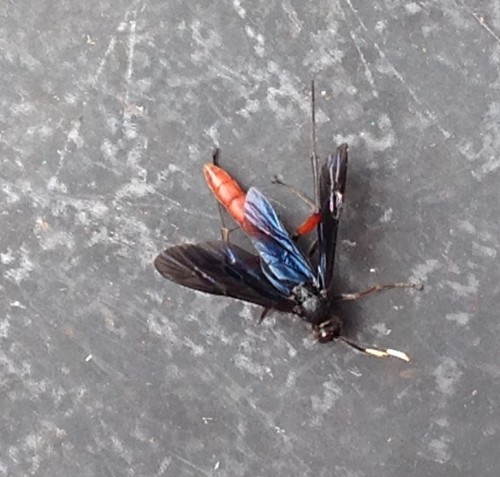
If you've spotted a striking, elongated insect with a prominent "stinger" (actually an ovipositor) hovering around trees or lumber, you're likely seeing a horntail—also called a woodwasp. Despite their intimidating appearance, these insects are harmless to people and rarely require control.
Horntails are primitive wasps (family Siricidae). Females use their ovipositor to drill into weakened, dying, or recently cut wood—especially conifers—and lay eggs. The larvae tunnel through the wood for 1–3 years, feeding on fungi they cultivate. They do not attack healthy, living trees.
The sirex woodwasp (Sirex noctilio) is an invasive species that can attack living pines, but it's not widespread in all regions. Most horntails encountered are native species targeting stressed wood.
No control is needed in most cases. Horntails are secondary invaders—their presence indicates the wood was already compromised. If they emerge from firewood indoors, simply vacuum them up. For structural timber, kiln-drying or proper seasoning prevents infestation.
Aspen Burrowing Insect: Likely Earwigs, Not Primary Pests
Finding Wild Elderberries: Join a Native Plant Rescue
North American Millipede: Harmless but Startlingly Large
Butterfly Identification Resources for Southeast Gardeners
Golden Larch vs. Common Larch: Clearing Up the Confusion
Barred Owl: The "Who Cooks for You?" Hunter
Bloody Dock (Rumex sanguineus): Ornamental or Invasive?
Creasy Greens: The Spring Tonic Wild Cress
Turtlehead (Chelone lyonii): Native Perennial for Damp Shade
Possum Grape (Ampelopsis cordata): Colorful Vine, Weedy Habit
Copyright © www.100flowers.win Botanic Garden All Rights Reserved