


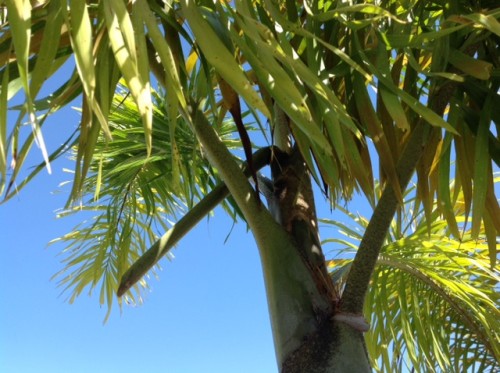
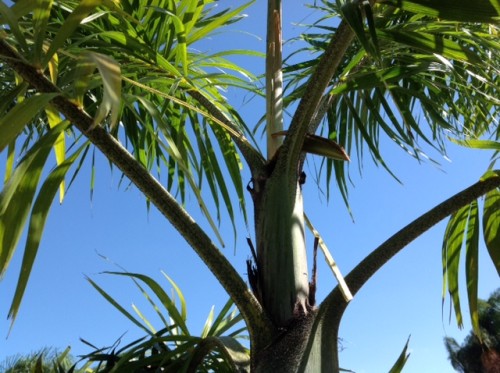
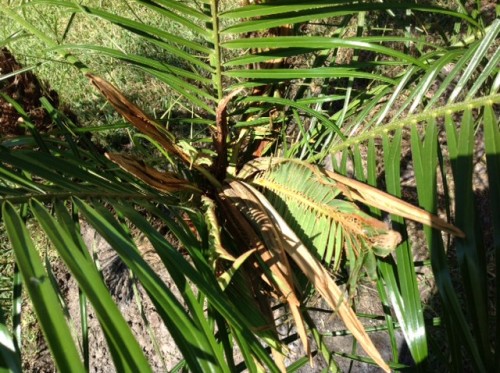
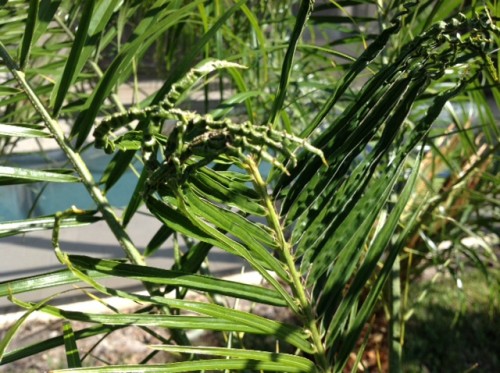
When a triple foxtail palm and a pygmy date palm in Bradenton, Florida, began showing abnormal growth—long, drooping center fronds followed by curly, stunted new leaves—the culprit was a classic nutrient disorder: boron deficiency. University of Florida specialist Monica L. Elliott confirmed the diagnosis, noting that while the pygmy date palm clearly exhibited the deficiency, the foxtail palm appeared to be recovering from a transient episode.
Boron is essential for cell wall formation, membrane function, and sugar transport. In palms, deficiency often manifests as:
These symptoms can appear suddenly after heavy rains leach boron from sandy soils, or during periods of rapid growth when demand outpaces supply.
Florida's sandy, low-organic-matter soils have little capacity to retain boron. Irrigation and rainfall easily leach this mobile nutrient below the root zone. Palms, with their high boron requirements, are especially vulnerable. Transient deficiencies may self-correct if conditions stabilize, but chronic shortage leads to permanent deformity or death.
The University of Florida recommends soil application of borax (sodium tetraborate) or a soluble boron fertilizer at labeled rates. For a medium-sized palm, 2–4 ounces of borax broadcast evenly over the root zone and watered in can correct the deficiency. Caution: Boron toxicity occurs at only slightly higher rates; never exceed label instructions. Foliar sprays with soluble boron (0.1–0.2% solution) provide faster but temporary relief. Retest soil after 3–6 months and monitor new growth for normal development.
Use a complete palm fertilizer containing micronutrients, including boron, applied 3–4 times per year. Choose formulations with slow-release nitrogen and potassium to match Florida's sandy soils. Regular soil testing helps tailor applications and avoid both deficiency and toxicity.

Date Palm Leaf Spots: Environmental Stress, Not Infectious Disease
Sunburned Palm Recovery: Acclimation, Rainwater, and Slow-Release Fertilizer
Canary Island Date Palm Seed Germination: Complete Protocol
Pygmy Date Palm Care: Light, Water, and Outdoor Time
Eliminating Spider Mites on Pygmy Date Palm
Pygmy Date Palm (Phoenix roebelenii): Feathery Fronds for Bright Spaces
Cretan Date Palm (Phoenix theophrasti): Europe's Only Native Palm
Copyright © www.100flowers.win Botanic Garden All Rights Reserved