


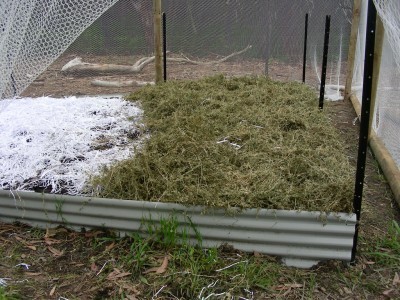
Hay provides summer brown material (when greens dominate) and can form compost bins that become compost themselves. Source: farm-spoiled hay or garden center autumn decorations.
Square outline of bales, second layer on back/sides. Front lower for access. Fill center, turn weekly. Higher walls retain heat. When finished, clip twine, incorporate bale hay into compost. Twine = organic tomato ties.
Some hay fields use herbicides harmless to landscaping but damaging to food crops. Test before using on edibles: Mix 20 core samples, blend 2:1 with potting soil. Plant beans in test vs. pure potting soil. If identical at 2-3 true leaves = safe. If stunted = landscaping only.
Hay composting = dual-purpose bins + free carbon, but verify safety for food gardens.
Building a Composting Toilet: A Water-Saving Waste Solution
Winter Composting: Keep Your Pile Active Through the Cold
Kitchen Composting 101: Turn Food Scraps into Garden Gold
Composting Diapers: Only Wet Ones, Never for Food Gardens
Composting Fish Waste: Turn Scraps into Nutrient-Rich Garden Gold
Winter Composting: Keeping Your Pile Active Through Cold Months
Composting Fish Waste: How to Turn Fish Scraps into Garden Gold
Composting Made Simple: Turn Waste into Garden Gold
Start Composting at Home: The Beginner's Guide to Heap Composting
Indoor Composting: Worm Bins & Small Bioreactors for Any Home
Composting Leaves: The Complete Guide to Making Leaf Mold & Leaf Compost
Kitchen Composting: Simple Methods for Recycling Food Scraps
Composting Diapers: What You Can and Can't Compost Safely
Composting Leaves: Create Rich Garden Soil from Fall Foliage
Copyright © www.100flowers.win Botanic Garden All Rights Reserved