


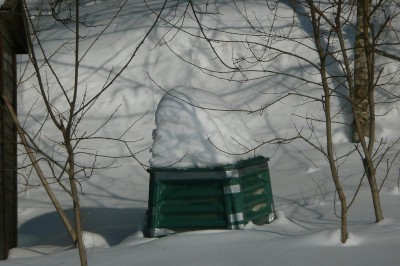
Composting doesn't pause for winter. Decomposition slows in cold temperatures, but bacteria, molds, and mites remain active and need energy. With preparation, winter composting is manageable for most gardeners.
Harvest finished compost before winter. Use it in beds, raised gardens, or store in lidded containers for spring. This frees bin space for new material.
Insulate bins in harsh climates: stack straw/hay bales or bagged leaves around bins to protect beneficial organisms from freezing.
Same layering principle: alternate greens (kitchen scraps, fresh garden waste) with browns (straw, newspaper, dead leaves).
Key difference: Turn minimally. Frequent turning loses precious heat. Cold slows decomposition—chop scraps smaller, shred leaves with a mower. Keep moist but not soggy.
Spring transition: Piles may be waterlogged after freeze-thaw cycles. Add extra browns to absorb excess moisture.
Pro tip: Keep a lidded kitchen scrap bucket by the back door. Fewer cold trips; pre-decomposition begins indoors with minimal odor.
Winter Garden Care: Essential Maintenance for Spring Success
Stop Smelly Compost: Balance Greens, Browns, Moisture & Air
Lasagna Composting: Sheet Mulch Your Way to Rich Soil
Composting with Hay Bales: Build a Bin That Becomes Compost Itself
Composting Cotton Gin Trash: Nutrient Value & Methods for Farmers & Gardeners
Composting with Hay: Building Bins and Testing for Herbicide Contamination
Composting Cotton Gin Trash: Turning Agricultural Waste into Garden Nutrients
How to Winterize Your Outdoor Fountain: Prevent Freeze Damage
Why Learn to Compost? Waste Less, Grow More
Composting Fish Waste: Turn Scraps into Nutrient-Rich Garden Gold
Managing Compost Odors: How to Maintain an Odorless Compost Bin
Lasagna Composting: Sheet Mulching for Soil Building and Sod Removal
Composting Fish Waste: How to Turn Fish Scraps into Garden Gold
How to Keep Birds Out of the Garden: Humane Deterrent Methods
Copyright © www.100flowers.win Botanic Garden All Rights Reserved