


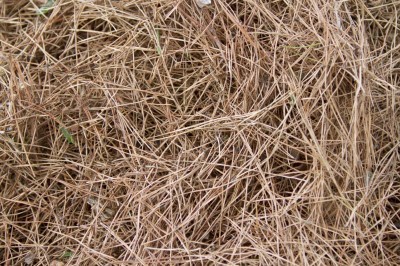
Pine needles are abundant and free across most of the country, making them an excellent source of organic matter for gardens. Whether added to compost piles or used as mulch around plants, they supply essential nutrients and enhance the soil's moisture retention. Once you understand how to compost pine needles properly, you can use them without worrying about negative effects.
Many gardeners avoid pine needles in compost, fearing they'll make the finished product too acidic. While fresh pine needles have a pH between 3.2 and 3.8 when they fall, they reach a nearly neutral pH after composting. You can safely add them to compost without risking harm to plants or soil acidification. However, working fresh pine needles directly into soil without composting may temporarily lower pH.
Another concern is their slow decomposition rate. Pine needles have a waxy coating that resists breakdown by bacteria and fungi, and their low initial pH inhibits compost microorganisms, further slowing the process.
Using aged pine needles—those that have served as mulch for a season—speeds decomposition significantly. Chopped pine needles also compost faster than whole ones. Simply mow over a pile of needles several times to shred them; the smaller the pieces, the quicker they'll break down.
One advantage of pine needles in compost is that they don't compact, keeping the pile aerated. This promotes airflow, resulting in a hotter pile that decomposes more quickly overall. However, pine needles themselves break down more slowly than other organic materials even in hot piles, so limit them to 10% of the total pile volume.
A simple, natural approach is to leave fallen needles where they land, allowing them to serve as mulch for the pine tree. They'll eventually decompose, returning rich organic nutrients to the tree, while new needles keep the mulch layer fresh.
Spruce and Pine "Pine Worms": Myth and Free Forester Assessment
Pine Needles Under Ponderosa Pines: Mulch Benefit vs. Grass Competition
Pine Needle Management: Leave, Rake, or Mulch?
Pines with 5 Needles per Bundle: Species Guide
Kitchen Composting 101: Turn Food Scraps into Garden Gold
Winter Composting: Keeping Your Pile Active Through Cold Months
Kitchen Composting: Simple Methods for Recycling Food Scraps
Managing Pine Needle Duft Under Ponderosa Pines for Native Plants
Composting Basics: Building and Maintaining a Pile
Removing Pine Needles from Rock Borders: Blower Technique
Why Learn to Compost? Waste Less, Grow More
Start Composting at Home: The Beginner's Guide to Heap Composting
Indoor Composting: Worm Bins & Small Bioreactors for Any Home
Composting Basics: How It Works and How to Start Your Own Pile
Copyright © www.100flowers.win Botanic Garden All Rights Reserved