


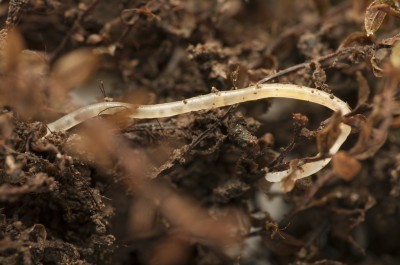
Noticing masses of tiny, white, thread-like worms in your compost? These aren't baby red wigglers—they're pot worms (enchytraeids), indicating conditions that favor them over common composting worms.
Pot worms consume waste and aerate compost like other worms, but they thrive in acidic, overly wet conditions that red wigglers dislike. A pot worm explosion signals your compost environment has shifted away from ideal for primary decomposers.
They exist in all healthy soil at low levels. When conditions become favorable (acidic, very wet), they multiply rapidly. They don't directly harm other worms, but their preferred conditions disadvantage red wigglers.
Dry the pile: Turn frequently, skip watering for a week, cover with tarp during rain.
Adjust pH: Add lime, phosphorus, wood ashes, powdered lime, or finely crushed eggshells. Population should decline quickly.
Temporary trap: Soak stale bread in milk, place on compost. Worms congregate—remove and discard.
Addressing root causes (moisture, pH) restores conditions for productive composting worms.
Testing Soil pH for Blueberries and Estimating Yield from a Small Planting
White Worms in Cephalotus Soil: Fungus Gnat Larvae
Farmyard Manure and Compost: The Foundation of Sustainable Soil Fertility
How to Make Compost: The Complete Guide to Black Gold for Your Garden
Essential Cultivation Practices for a Thriving Vegetable Garden
The Benefits of Manure Compost in Your Garden
Tomato Hornworms Appear from Hawkmoth Eggs: UV Light Reveals Them
Petunia Worms in Reused Pots: Soil vs. Butterfly Source
Fixing a Tomato Garden Ruined by Fresh Horse Manure
Planting a Garden After Removing a Cedar Hedge: Watch Soil Layers and pH
What Can and Cannot Go in a Compost Pile from the Vegetable Garden
Get the Most from Your Vibrant Organic Garden
Putting the Vegetable Garden to Bed: A Fall Cleanup Checklist for Better Soil
Earthworms in Soil: Benefits of Garden Worms and How to Encourage Them
Copyright © www.100flowers.win Botanic Garden All Rights Reserved