


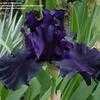
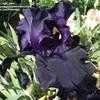
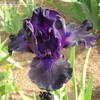
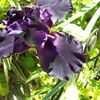
The Tall Bearded Iris 'Ghost Train' rolls through the late spring garden on a spectral journey from the millennium. Introduced in 2000 by Schreiner, this turn-of-the-century cultivar haunts the border with ethereal beauty—a phantom presence that appears and vanishes with the bloom season.
| Family: | Iridaceae (eye-rid-AY-see-ee) |
| Genus: | Iris (EYE-ris) |
| Cultivar: | Ghost Train |
| Hybridized by: | Schreiner |
| Registered/Introduced: | 2000 |
Schreiner's 'Ghost Train' (2000) represents the millennium achievement of a program that has spanned generations. The name suggests a pale, ethereal cultivar—perhaps a luminous white, a ghostly blue-white, or a glacierata pattern with the kind of translucent quality that makes flowers appear to float above the foliage. Ghost-themed names in iris nomenclature often signal pale, luminous cultivars with an otherworldly presence. As a 2000 introduction, 'Ghost Train' benefits from the cutting edge of TB breeding: strong, well-branched stems; high bud counts; excellent substance; and the latest advances in pattern clarity for luminata/glacierata types. Tall bearded irises are the architectural anchors of the late spring border. Their vertical presence creates essential structure. The sword-like foliage adds strong linear texture throughout the season. For maximum impact, plant in drifts of 3-5 rhizomes of the same cultivar. Companion plants should share cultural requirements: full sun, well-drained soil, moderate water. Daylilies, coneflowers, Russian sage, and ornamental grasses are excellent partners.
Tall Bearded Iris 'Mesmerizer': A 1990 Byers Hypnotic
Tall Bearded Iris 'Ocelot': A 1997 Ghio Spotted Wonder
Tall Bearded Iris 'Seafarer': A 1948 Butterick Voyage
Tall Bearded Iris 'Swerti': A 1612 Historic Survivor
Tall Bearded Iris 'Acoma': A 1987 Magee Introduction
Tall Bearded Iris 'Conjuration': A 1988 Byers Introduction
Tall Bearded Iris 'Fogbound': A 1997 Keppel Introduction
Tall Bearded Iris 'Jumping': A 2000 Schreiner Introduction
Tall Bearded Iris 'Liaison': A 1986 Ghio Introduction
Tall Bearded Iris 'Rustler': A 1987 Keppel Introduction
Copyright © www.100flowers.win Botanic Garden All Rights Reserved