


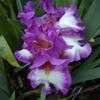
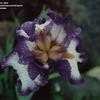
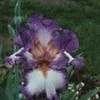
The Tall Bearded Iris 'Footloose' kicks up its heels in the late spring garden, dancing with the free-spirited joy of its namesake. Introduced in 1993 by Schreiner, this cultivar captures the kinetic energy of dance in floral form—ruffled, waving petals that seem to move even in still air.

| Family: | Iridaceae (eye-rid-AY-see-ee) |
| Genus: | Iris (EYE-ris) |
| Cultivar: | Footloose |
| Hybridized by: | Schreiner |
| Registered/Introduced: | 1993 |
Schreiner's 'Footloose' (1993) represents the early 1990s output of a program that has defined tall bearded iris excellence for generations. Dance-themed names are a delightful subcategory in iris nomenclature: 'Dance Hall Dolly,' 'Swingtown,' 'Fanfaron,' 'Footloose'—all suggesting movement, rhythm, and kinetic beauty. The name implies heavily ruffled, waving petals that catch every breeze. Schreiner introductions from this era are noted for their vigorous growth, clean foliage, and reliable bloom. Tall bearded irises are heavy feeders; apply a low-nitrogen, high-phosphorus fertilizer (5-10-10 or 6-10-10) in early spring as growth begins, and again immediately after flowering. Avoid high-nitrogen fertilizers (lawn fertilizers, fresh manure), which promote soft, disease-prone foliage at the expense of flowers. The rhizomes must be planted at soil level in a slight mound—this is the single most critical cultural requirement. Full sun (minimum 6 hours) is essential for good bloom and strong stems.
Tall Bearded Iris 'Mesmerizer': A 1990 Byers Hypnotic
Tall Bearded Iris 'Ocelot': A 1997 Ghio Spotted Wonder
Tall Bearded Iris 'Seafarer': A 1948 Butterick Voyage
Tall Bearded Iris 'Swerti': A 1612 Historic Survivor
Tall Bearded Iris 'Acoma': A 1987 Magee Introduction
Tall Bearded Iris 'Conjuration': A 1988 Byers Introduction
Tall Bearded Iris 'Fogbound': A 1997 Keppel Introduction
Tall Bearded Iris 'Jumping': A 2000 Schreiner Introduction
Tall Bearded Iris 'Liaison': A 1986 Ghio Introduction
Tall Bearded Iris 'Rustler': A 1987 Keppel Introduction
Copyright © www.100flowers.win Botanic Garden All Rights Reserved