


The Tall Bearded Iris 'Eagle Control' soars with commanding authority over the late spring garden. Introduced in 1998 by Sutton, this cultivar embodies the keen vision and powerful presence of its raptor namesake, translating aerial dominance into floral supremacy.
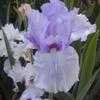
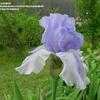
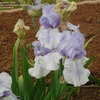

| Family: | Iridaceae (eye-rid-AY-see-ee) |
| Genus: | Iris (EYE-ris) |
| Cultivar: | Eagle Control |
| Hybridized by: | Sutton |
| Registered/Introduced: | 1998 |
Sutton's 'Eagle Control' (1998) represents the late 1990s output of a program known for strong, reliable tall bearded irises with creative names. Bird-of-prey names in iris nomenclature ('Eagle Control,' 'Hawk,' 'Falcon,' 'Raptor') often signal cultivars with strong, clean lines and commanding presence. As a 1998 introduction, this cultivar benefits from the mature phase of modern TB breeding where the focus was on refinement—better proportion, stronger stems, higher bud counts, cleaner foliage—rather than simply more ruffling. Tall bearded irises require full sun (minimum 6 hours), excellent drainage, and near-neutral soil pH. They are heavy feeders; fertilize in early spring and after bloom with a low-nitrogen, high-phosphorus fertilizer (5-10-10 or similar). The rhizomes must be planted at soil level, not buried. This is the single most important cultural requirement—buried rhizomes rot and fail to bloom. Space plants 18-24 inches apart for air circulation and future increase.
Tall Bearded Iris 'Mesmerizer': A 1990 Byers Hypnotic
Tall Bearded Iris 'Ocelot': A 1997 Ghio Spotted Wonder
Tall Bearded Iris 'Seafarer': A 1948 Butterick Voyage
Tall Bearded Iris 'Swerti': A 1612 Historic Survivor
Tall Bearded Iris 'Acoma': A 1987 Magee Introduction
Tall Bearded Iris 'Conjuration': A 1988 Byers Introduction
Tall Bearded Iris 'Fogbound': A 1997 Keppel Introduction
Tall Bearded Iris 'Jumping': A 2000 Schreiner Introduction
Tall Bearded Iris 'Liaison': A 1986 Ghio Introduction
Tall Bearded Iris 'Rustler': A 1987 Keppel Introduction
Copyright © www.100flowers.win Botanic Garden All Rights Reserved