


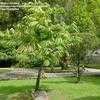
Amherstia, called the Queen of Flowering Trees or Pride of Burma, is widely considered one of the most spectacular flowering trees on Earth. Native to Myanmar (Burma) and Thailand, Amherstia nobilis (family Caesalpiniaceae) is the sole species in its genus—a monotypic treasure of the tropical world.
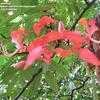
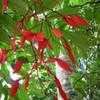
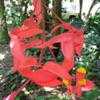
The flowers are breathtaking: pendulous racemes (12-24 inches) of large, orchid-like blossoms—each 3-4 inches wide with five crimson petals, two of which are elongated and curved like a lobster claw, the others rounded. The petals are crimson with yellow tips and white markings. The effect is a cascade of exotic, colorful blooms. The leaves are pinnately compound, 12-18 inches long, with 6-8 pairs of large, leathery leaflets, coppery when young.
| Family: | Caesalpiniaceae (ses-al-pin-ee-AY-see-ee) |
| Genus: | Amherstia (am-HER-stee-uh) |
| Species: | nobilis (NO-bil-iss) |
Amherstia is rare in cultivation and endangered in the wild. It requires true tropical conditions: constant warmth (zone 11+), high humidity, rich, moist, well-drained soil, and partial shade when young. It's slow-growing, difficult to propagate (seeds recalcitrant, cuttings difficult), and shy to flower outside ideal conditions. It reaches 30-40 feet tall with a spreading crown.
It's a botanical garden treasure and a status symbol for serious tropical collectors. In its native range, it's planted at temples and palaces. The related Saraca indica (Ashoka Tree) has similar pendulous orange flowers and is somewhat easier. For most gardeners, Amherstia remains a dream—a tree of legendary beauty that defines "Queen of Flowering Trees."
Breadfruit (Artocarpus altilis): Staple Crop of the Pacific
Lychee (Litchi chinensis): Tropical Fruit Delicacy
Lemon Tree: The Classic Citrus for Fruit, Fragrance & Foliage
Chonta Palm (Juania australis): Rare Chilean Palm
European Hornbeam (Carpinus betulus): The Classic Hedge & Shade Tree
Plumeria pudica: The Everblooming, Evergreen Frangipani
Durian (Durio zibethinus): The King of Fruits—Love It or Hate It
Copyright © www.100flowers.win Botanic Garden All Rights Reserved