


Smooth Sumac is a native North American suckering shrub that forms extensive colonies, providing brilliant red fall color, wildlife food, and erosion control across a vast range. Rhus glabra (family Anacardiaceae) is the only shrub/tree native to all 48 contiguous states—a testament to its adaptability.
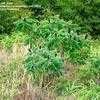
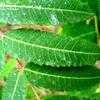
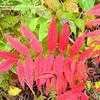
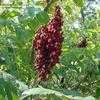
Smooth Sumac spreads aggressively by root suckers, forming large, open colonies 10-20 feet tall. The leaves are pinnately compound, 12-18 inches long, with 11-31 lanceolate leaflets, dark green above, whitish beneath. In fall, they turn intense, glowing shades of scarlet, orange, and red—among the most brilliant fall color of any native plant. In summer, female plants produce dense, upright panicles (6-12 inches) of small greenish flowers, followed by clusters of fuzzy, red drupes that persist into winter.
| Family: | Anacardiaceae (an-a-kard-ee-AY-see-ee) |
| Genus: | Rhus (roos) |
| Species: | glabra (GLAY-bruh) |
The drupes are high in vitamin C and malic acid—used for "sumac-ade" (a lemonade-like drink), spice (Middle Eastern za'atar), and dye. They're critical winter food for birds (robins, bluebirds, turkeys) and mammals. The colonies provide nesting cover. Native Americans used all parts medicinally.
Smooth Sumac thrives in full sun, poor, dry, rocky, or sandy soils—sites where little else grows. It's invaluable for erosion control on slopes, highway banks, and disturbed sites. However, its aggressive suckering makes it unsuitable for small gardens. Use in naturalized areas, wildlife plantings, and large-scale restoration. Mow or remove suckers to contain. It's not poisonous like Poison Sumac (Toxicodendron vernix), which has white berries and wet habitat.
Hosta plantaginea: The Fragrant Species with Giant White Flowers
Comfortroot (Hibiscus aculeatus)
Hibiscus hamabo: Coastal Species
Washingtonia × filibusta: The Hybrid Fan Palm for Marginal Climates
Alabama Lip Fern (Cheilanthes alabamensis): Tiny, Xeric Fern for Rock Crevices
Cutleaf Staghorn Sumac 'Laciniata' (Rhus typhina 'Laciniata'): Dramatic Foliage
Mandrinette – Hibiscus boryanus
Furcraea macdougalii: A Giant, Trunk-Forming Relative of Agave
Euphorbia bupleurifolia: A Bizarre, Pineapple-Topped Succulent with a Caudex
Candelilla (Euphorbia antisyphilitica): A Leafless, Wax-Producing Shrub for Extreme Heat
Desert Rose (Adenium arabicum)
Copyright © www.100flowers.win Botanic Garden All Rights Reserved