


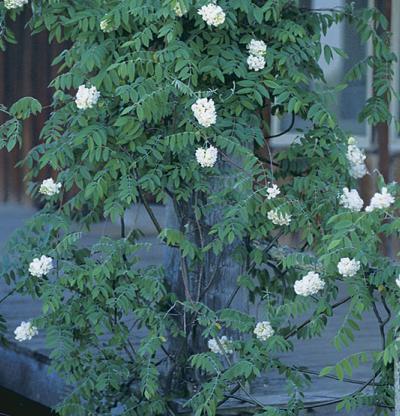
American wisteria (Wisteria frutescens) is a North American native vine with abundant pale lilac-purple flower clusters. Less fragrant than Asian species but easier to control—no long root suckers. Blooms June-August (later, avoiding late frosts). Climbs 30+ feet on arbors, pergolas, walls. Can be trained as small tree. 'Nivea' is white-flowered form. Blooms on current season's growth.
Full sun in well-drained soil. May take several years to establish flowering. Root restriction encourages blooming. Grows as far south as Florida.
Prune soon after blooming and again in fall. Provide strong support. Propagation difficult for home gardeners.
Dieback, crown gall, leaf spots, viruses, Japanese beetles, aphids, leaf miners, scale, mealybugs.
Wisteria Recurrent Dieback: Root Disease in Established Vine
Sudden Wisteria Collapse: Chemical Damage from Power Washing
Marguerite Daisy (Argyranthemum frutescens): Continuous Blooms for Containers
Dalea frutescens (Black Dalea): Drought-Tolerant Southwest Native Shrub
Ilex opaca: American Holly, a Majestic Evergreen Tree with Red Berries
Leucophyllum frutescens – Silver Leaf, Texas Sage for Hot Dry Sites
Wisteria floribunda (Japanese Wisteria): Fragrant Cascading Flower Clusters
Wisteria Seed Pods: What They Are and Bloom Timeline
Wisteria Seed Pod Harvest: Timing Is Everything
Wisteria Seed vs. Layering: 10-15 Year Bloom Delay from Seed
How to Harvest and Grow Wisteria from Seed Pods
Replacing Aggressive Wisteria on an Arbor Near Power Lines
Training Trumpet Vine and Wisteria on an Arbor: Fertilize with Slow-Release Osmocote
Fall Rose Care in Louisville: Watering, Black Spot, and Winter Prep
Copyright © www.100flowers.win Botanic Garden All Rights Reserved