


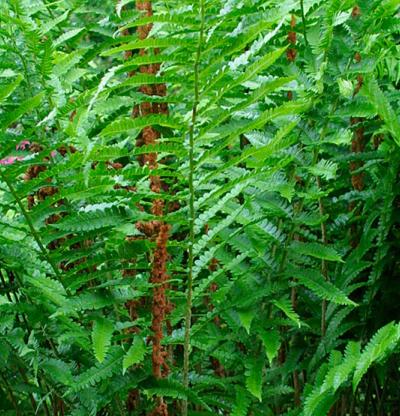
Osmunda cinnamomea is a deciduous fern native to eastern North America. It bears shuttlecocks of lance‑shaped, feathery pale green fronds. Separate, erect, narrow fertile fronds are cinnamon‑brown in spring, giving the plant its common name. Young fiddleheads are edible.
Moist, fertile, rich, preferably acidic soil in light, dappled shade.
Divide clumps in autumn or early spring. Prone to rust.
Beds, borders, waterside; woodland garden style.
| Height | 1–3 ft. |
| Spread | 1–3 ft. |
| Growth Pace | Moderate |
| Light | Part Shade Only |
| Moisture | Medium |
| Maintenance | Moderate |
| Type | Fern |
Why Your Indoor Boston Fern Is Dropping Leaves—and How to Fix It
Asparagus Fern: Cascading 'Fern' with Hidden Thorns and Red Berries
Maidenhair Fern (Adiantum raddianum): Delicate, Lacy Fronds for Devoted Growers
Button Fern Care: Drought-Tolerant & Charming
Cyrtomium fortunei (Japanese Holly Fern): Evergreen Fern for Shade Gardens
Royal Fern: A Majestic, Globally Native Fern for Shade and Wet Soil
Boston Fern (Nephrolepis): Classic Air-Purifying Elegance for Humid Spaces
Button Fern (Pellaea rotundifolia) Color Variations and Care
Himalayan Maidenhair Fern (Adiantum venustum): Bronze-Pink New Fronds on Black Stems
Dryopteris celsa (Log Fern): Tall Semi-Evergreen Fern for Moist Shade
Dryopteris × australis (Dixie Wood Fern): Tall Hybrid Fern for Dry Shade
Polystichum makinoi: Makinoi's Holly Fern
Thelypteris kunthii: Kunth's Maiden Fern for Robust Bronze-Tinted Foliage
Copyright © www.100flowers.win Botanic Garden All Rights Reserved