


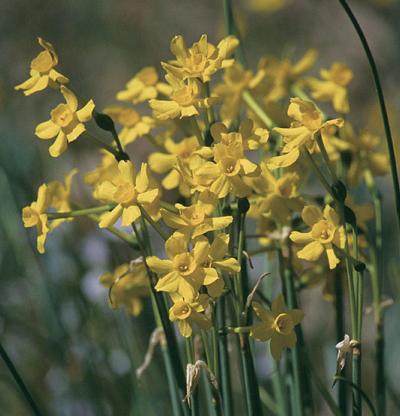
Among the daffodil divisions, Division 10 (Species and Wild Variants) holds the charming *Narcissus jonquilla*—the true jonquil. Native to Spain and Portugal, this late-blooming species bears clusters of 2–5 (up to 5) small, intensely fragrant, golden-yellow flowers with narrow, cylindrical petals and a small cup. Its rush-like, dark green foliage and sweet scent make it a favorite for naturalizing in meadows, woodland edges, and heritage gardens.
| Trait | Details |
|---|---|
| Height | 6–12 in. |
| Growth Habit | Clumps |
| Growth Pace | Moderate |
| Light | Full Sun to Part Shade |
| Moisture | Medium |
| Maintenance | Low |
| Bloom Time | Spring (Late) |
| Flower Color | Yellow |
| Fragrance | Strong, Sweet |
| Deer Resistant | Yes |
| Naturalizing | Excellent |
Weed-and-Feed Accidentally Applied to Garden: Damage Control
Protecting Gardens from Bird Damage
Ants Destroying Vegetable Roots? Organic Controls That Work
What Can and Cannot Go in a Compost Pile from the Vegetable Garden
Garden Fountains: Easy Elegance for Any Outdoor Space
Garden Urns: Timeless Elegance for Outdoor Spaces
Garden Streams: Add Sound, Movement, and Life to Your Landscape
Garden Sundials: Timeless Beauty, Durable Materials & Creative Placement
Garden Decorations: Transform Your Yard into a Living Room Outdoors
Garden Benches: Essential Seating for Enjoying Your Outdoor Sanctuary
Garden Pedestals: Elevate Planters, Statuary & Style
Garden Sprayers: Spot, Backpack & Tow-Behind for Every Scale
Copyright © www.100flowers.win Botanic Garden All Rights Reserved