


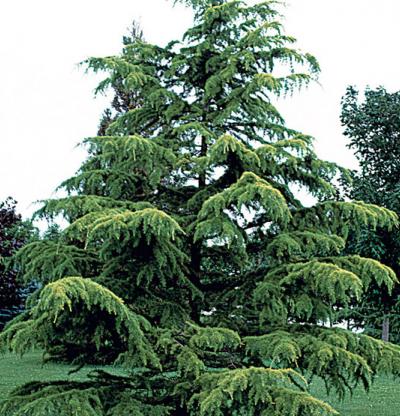
This evergreen coniferous tree has a conical form with whorls of green needles, growing to 100 feet tall and 30 feet wide with spreading branches and pendant branch tips. Showy light brown cones mature in fall.
Full sun, well-drained soil (Zones 6–9). Various rots, blights, cankers, and insects may become problems.
Identifying Cedar Trees with Orange Seed Pods
Is Cedar Mulch Safe for Flowers and Shrubs?
Cedar Hedge Fertilization and Pruning Schedule for Quebec Climate
Pruning Cedar Shrubs: Timing, Technique, and Limits
Transplanting 20-Year Cedar: Species Matters
Incense Cedar Growth Rate and Transplanting
Renovating an Overgrown, Neglected Cedar Hedge
Transplanting 10-Foot Pyramid Cedar: High Risk, Fall Timing
Using Wood Chips as Winter Mulch: Cedar and Balsam Considerations
Cedar Mulch: Great for Gardens, Bad for Lawns
Cedar Bark Mulch: Termite, Flea & Tick Repellent
Cedar Lawn Furniture: Natural Beauty, Durability & Sustainable Sourcing
Copyright © www.100flowers.win Botanic Garden All Rights Reserved