


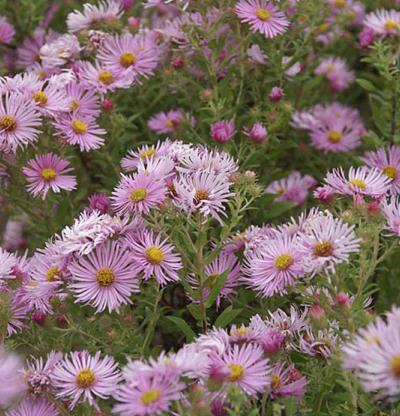
New England aster (Aster novae-angliae) has strong, almost woody stems bearing large sprays (to 10 inches) of violet-purple flowers. Flowers have more petals than New York aster, giving a frillier look; tend to close at night and on cold days. Many cultivars exist.
Most asters require frequent division. Fungal diseases: wilt disease, powdery mildew, botrytis.
| Height | 3–6 ft. |
| Growth Habit | Clumps |
| Light | Full Sun to Part Shade |
| Moisture | Medium |
| Maintenance | Moderate |
| Features | Attracts bees, butterflies, native, showy flowers |
| Bloom Time | Fall, Late Summer, Summer |
| Flower Color | Purple, Yellow |
| Uses | Beds, Borders |
| Style | Cottage Garden, Meadow Garden |
| Seasonal Interest | Summer Interest |
| Type | Perennials |
Fragrant Container Plants for a New Jersey Deck
Why Your Hydrangea Stopped Blooming: Pruning Timing Is Everything
Balancing Foliage and Blooms: Fixing Non-Flowering Roses and Powdery Mildew
Deadheading African Violets: Where and How to Remove Spent Blooms
Why Your Mature African Violet Refuses to Bloom—and How to Fix It
Drosera × 'Marston Dragon' Flowering Twice in One Season: Normal or Resource-Driven?
Aster Yellows (Phytoplasma): Leafhopper Transmission, Symptoms & Management
Feverfew for Migraines and Chamomile Tea: Uses and Preparation
Bougainvillea Pruning: Timing Is Everything for Blooms
Anthurium "Pustules" Explained: Normal Seed Development
Kalanchoe Not Blooming: Repotting and Light Cycle Issues
Designing a Cutting Garden: Expert Tips for Long-Lasting Blooms
Growing Hardy Hibiscus in Michigan: A Zone 5 Success Story
Why Bougainvillea Stops Blooming After Transplant: Nitrogen, Pruning & Water
Copyright © www.100flowers.win Botanic Garden All Rights Reserved