


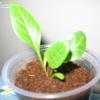
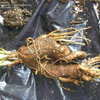
Mandrake (Mandragora officinarum) is a legendary perennial herb native to the Mediterranean region. Its thick, often forked root resembles a human form, inspiring centuries of myth, magic, and medicinal lore. All parts are highly toxic (tropane alkaloids); historical use was as an anesthetic, hallucinogen, and poison.
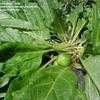
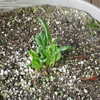
Stemless perennial with a rosette of large, ovate, wrinkled leaves 20–40 cm long, dark green. Flowers are bell-shaped, 3–5 cm wide, pale greenish-yellow to purple, borne singly on short stalks from the crown, blooming autumn to spring. Fruit is a fleshy, yellow-orange berry 3–5 cm wide. The massive taproot is often anthropomorphic.
| Family: | Solanaceae (so-lan-AY-see-ee) |
| Genus: | Mandragora (man-DRAG-or-uh) |
| Species: | officinarum (off-ik-IN-ar-um) |
| Synonyms: | Atropa mandragora, Mandragora officinalis |
Featured in Bible (Genesis, Song of Songs), Greek mythology (Circe), Shakespeare, Harry Potter. Root harvested with rituals (dog-pulling) to avoid fatal scream. Used in medieval anesthesia, love potions, and witchcraft. Modern medicine uses derived alkaloids (scopolamine, hyoscyamine) for motion sickness, IBS.
Extremely toxic. Ingestion causes hallucinations, tachycardia, seizures, coma, death. Not for home herbal use. Grow only as a historical/botanical curiosity, labeled and secured from children and pets.
Tropical Hibiscus 'First Love' – Hibiscus rosa-sinensis
Tropical Hibiscus 'Love Story' – Black Hybrid
Tropical Hibiscus 'Tots My Love': A Charming 2009 Jordan Hybrid
Malay Apple (Syzygium malaccense): The Mountain Apple of the Tropics
Datura 'Black Currant Swirl': Dramatic Double Blooms for Night Gardens
Datura 'Double Purple': Ruffled, Dark Trumpets for Night Gardens
Amaryllis 'Apple Blossom' (Hippeastrum 'Apple Blossom'): Delicate Pink & White Giants
Copyright © www.100flowers.win Botanic Garden All Rights Reserved