


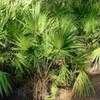
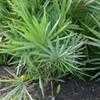
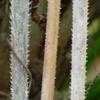
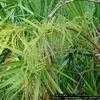
Saw palmetto (Serenoa repens) is a low, clumping palm native to the southeastern United States. Its fan-shaped leaves have sharp, saw-toothed petioles (hence the name). It produces fragrant, creamy-white flowers in spring, followed by blue-black berries that are a critical food for wildlife and the source of a popular prostate health supplement.
| Family: | Arecaceae (ar-ek-AY-see-ee) |
| Genus: | Serenoa (se-REN-oh-uh) |
| Species: | repens (REE-penz) |
This slow-growing, long-lived palm forms dense thickets 3–6 feet tall (occasionally to 10 feet). It's extremely drought, fire, and salt tolerant. The berries are high in fatty acids and phytosterols.
Grow in full sun to shade, well-drained soil. Very low maintenance. Transplanting is difficult due to deep roots; best planted from container. Hardy in USDA zones 8–11.
Tropical Hibiscus 'Silver Dragon': Black's 2009 Mythical Creature
Giant Chinese Silver Grass (Miscanthus giganteus)
White Poplar (Populus alba): The Silver-Leaved Shade Tree
Scrub Pine (Pinus clausa): Florida's Fire-Adapted Sand Pine
Brazoria Palmetto (Sabal × brazoriensis): The Rare Texas Hybrid Palm
Stachys byzantina 'Silver Carpet': Lamb's Ear – Non-Flowering Silver Foliage Ground Cover
Dichondra argentea: Silver Dichondra – Metallic Silver Kidney Leaves for Hot, Dry Sites
Platycerium veitchii 'Lemoinei': Silver Elkhorn Fern
Silver Dollar Maidenhair (Adiantum peruvianum)
Rosemary (Rosmarinus officinalis): Aromatic Evergreen Herb for Kitchen and Garden
Catnip (Nepeta cataria): The Feline Favorite Herb
Borage (Borago officinalis): Starflower for Bees and Cuisine
Comfrey (Symphytum officinale): Healing Herb and Dynamic Accumulator
Copyright © www.100flowers.win Botanic Garden All Rights Reserved