


1. Home
  2. Question and Answer
  3. Houseplants
  4. Garden Articles
  5. Most Popular Plants
  6. Plant Nutrition

White Poplar (Populus alba): The Silver-Leaved Shade Tree

Populus alba: The Flickering Silver Sentinel

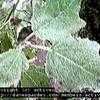
Few trees catch the light like *Populus alba*, the white or silver poplar. Its leaves—dark green above, dense white tomentose (felted) beneath—flash silver with every breeze, creating a shimmering canopy visible from afar. Fast-growing, tough, and adaptable, this Eurasian native has naturalized widely, valued for quick shade and windbreaks but often cautioned for its aggressive roots and suckering habit.

Botanical Profile

  • Family: Salicaceae (willow family).
  • Genus: *Populus* (poplars, aspens, cottonwoods).
  • Species: *P. alba*.
  • Habit: Deciduous tree, 40–80 ft tall, 40–60 ft wide; broad, rounded crown; often multi-stemmed from suckers.
  • Leaves: Highly variable: ovate to maple-like (3–5 lobes), 2–5 in.; **dark green above, dense white woolly hairs below**—the defining feature.
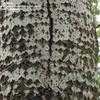
  • Bark: Young: smooth, white-gray with diamond lenticels. Mature: dark, furrowed at base; white upper branches.
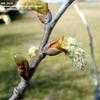
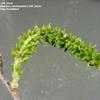
  • Flowers: Dioecious. Male: red catkins (2–3 in.). Female: green catkins → cottony seeds.
  • Roots: Extensive, aggressive, shallow; produce abundant suckers (clonal colonies).

Native Range and Distribution

  • Native: Central/Southern Europe, North Africa, Central Asia to China.
  • Introduced: North America (colonial era), Australia, New Zealand, South Africa, South America.
  • Naturalized: Widespread in temperate zones; often near old homesteads, waterways.

Uses and Values

  • Ornamental: Silvery foliage effect; striking in groups or as specimen.
  • Windbreak/Shelterbelt: Fast, dense growth; classic Great Plains shelterbelt component.
  • Erosion control: Rapid root colonization of banks, spoil piles.
  • Timber: Light, soft, low durability; pulp, boxes, matches, plywood.
  • Biomass/Bioenergy: Short-rotation coppice potential.
  • Phytoremediation: Uptakes heavy metals, organics; studied for landfill caps.

Growing Requirements

  • Hardiness: USDA zones 3–8.
  • Light: Full sun.
  • Soil: Extremely adaptable: wet to dry, clay to sand, acidic to alkaline, saline, compacted.
  • Water: Tolerates flooding and drought once established.
  • Propagation: Very easy: hardwood cuttings, root cuttings, suckers, seed.
  • Growth rate: Very fast: 4–6+ ft/year.

Management Challenges

  • Suckering: **Major issue.** Forms dense thickets from root suckers; difficult to eradicate. Mowing stimulates more suckers.
  • Root damage: Aggressive roots invade sewers, foundations, drainage tiles, septic fields.
  • Weak wood: Brittle branches break in ice/wind; hazard near structures.
  • Litter: Cottony seed (female), twigs, leaves.
  • Pests/Diseases: Cankers (*Cytospora*), borers, leaf beetles, aphids.
  • Invasiveness: Listed invasive in multiple US states, Canada, Australia, NZ.

Cultivars (Reduced Suckering)

  • 'Pyramidalis' (Bolleana poplar) – narrow, columnar; less suckering.
  • 'Nivea' – whiter leaf undersides.
  • 'Richardii' – golden spring foliage.

Verdict

Plant *Populus alba* only where its suckering and root aggression are assets (reclamation, windbreaks, remote areas) or where cultivars with reduced suckering are used. Avoid residential yards, near infrastructure, or natural areas.

Copyright © www.100flowers.win Botanic Garden All Rights Reserved