


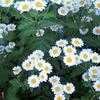
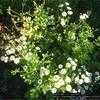
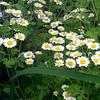
Feverfew (Tanacetum parthenium) is a short-lived perennial herb with cheerful, daisy-like white flowers and yellow centers. Its feathery, aromatic leaves have been used for centuries in traditional medicine, most notably for preventing migraine headaches. It self-seeds readily, naturalizing in cottage gardens.

| Family: | Asteraceae (ass-ter-AY-see-ee) |
| Genus: | Tanacetum (TAN-uh-SEE-tum) |
| Species: | parthenium (par-THEN-ee-um) |
| Synonyms: | Chrysanthemum parthenium, Pyrethrum parthenium |
Native to the Balkans, feverfew grows 12–24 inches tall with deeply lobed, bright green leaves that emit a strong, bitter aroma when crushed. The composite flowers bloom from early summer to fall. The name derives from Latin febrifugia ("fever reducer").
Grow in full sun to part shade, well-drained soil. Tolerates poor soil and drought once established. Deadhead to prolong bloom and reduce self-seeding. May cause mouth ulcers if fresh leaves are chewed; consult a healthcare provider before medicinal use. Hardy in USDA zones 5–9.
Anacampseros rufescens: A Purple-Leaved, Caudiciform Succulent
Echeveria nodulosa: The Painted Echeveria
Aloinopsis rubrolineata: A Tiny, Red-Lined Mesemb
Opuntia scheeri: A Shrubby, Red-Flowered Prickly Pear
Pachgerocereus orcuttii: A Rare, Hybrid Columnar Cactus
Rosemary (Rosmarinus officinalis): Aromatic Evergreen Herb for Kitchen and Garden
Catnip (Nepeta cataria): The Feline Favorite Herb
Patchouli (Pogostemon cablin): The Iconic Fragrance Herb
Borage (Borago officinalis): Starflower for Bees and Cuisine
Comfrey (Symphytum officinale): Healing Herb and Dynamic Accumulator
Lantana (Lantana camara): Colorful Clusters for Sunny Gardens
Copyright © www.100flowers.win Botanic Garden All Rights Reserved