


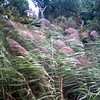
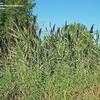
Common Reed, Phragmites australis, is a tall, perennial grass found in wetlands on every continent except Antarctica. It forms vast, dense stands that dominate marshes, lake edges, and ditches.
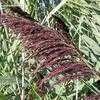
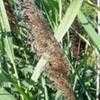
This grass spreads aggressively by thick rhizomes and stolons, forming monocultures. Stems can reach 10–15 feet tall, with broad, flat leaves. The large, feathery, purple-tinged panicles appear in late summer, turning silvery-tan. It provides habitat but can be invasive, displacing native wetland plants.
Historically used for thatching, paper, and biofuel. In constructed wetlands, it aids wastewater treatment. Management of invasive stands includes burning, grazing, herbicides, and water-level manipulation. The native North American subspecies (P. australis subsp. americanus) is less aggressive than the introduced Eurasian haplotype.
| Family: | Poaceae (poh-AY-see-ee) (Info) |
| Genus: | Phragmites (frag-MY-tees) (Info) |
| Species: | australis (aw-STRAL-iss) (Info) |
| Synonym: | Phragmites communis |
Salvia officinalis 'Tricolor': Variegated Culinary Sage with Pink, White, and Green Leaves
Salvia officinalis 'Berggarten': Culinary Sage with Large Round Leaves
Feather Reed Grass 'Karl Foerster' (Calamagrostis acutiflora 'Karl Foerster')
Striped Giant Reed 'Peppermint Stick' (Arundo donax): Bold Variegated Architectural Grass
Polypodium vulgare: Common Polypody
English Thyme (Thymus vulgaris): The Classic Culinary Thyme for Every Herb Garden
Common Sage 'Aurea' (Salvia officinalis 'Aurea')
Common Sage 'Purpurescens' (Salvia officinalis 'Purpurescens')
Common Sage 'Icterina' (Salvia officinalis 'Icterina')
Common Sage 'Purpurea' (Salvia officinalis 'Purpurea')
Salvia officinalis 'Rosea' – Pink Flowering Garden Sage
Copyright © www.100flowers.win Botanic Garden All Rights Reserved