


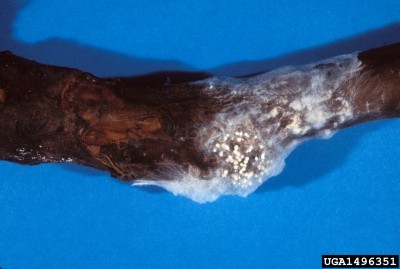
Southern blight (also called southern wilt, stem rot, root rot), caused by Sclerotium rolfsii, attacks vegetables and ornamentals at or below the soil line in warm, moist summer conditions. White fungal mycelia and tan, mustard-seed-sized sclerotia at the stem base are diagnostic. Effective fungicides are restricted to commercial applicators; home gardeners must rely on cultural controls.
Sclerotium rolfsii survives years as sclerotia. Once established, it's a permanent resident. The gardener who sanitizes obsessively, solarizes annually in warm zones, and destroys outbreaks immediately keeps losses minimal. The one who ignores the white fans at the stem base loses bed after bed.
Fungus Gnat Management: Soil Moisture, Barriers, and Biological Controls
Mulch Selection and Depth for Hillside Erosion Control in San Diego
Anthracnose: Fungal Leaf & Twig Blight on Trees, Shrubs & Greenhouse Crops
Crown Rot (Soil-Borne Fungus): Identification, Rescue Attempt & Prevention
Anthracnose: Identification, Control & Prevention Guide
Soil First: The Foundation of a Successful PA Herb and Vegetable Garden
No-Dig Gardening for Aging Bodies: Mulch Over Machines
Over-Fertilized Squash and Tomatoes? How to Recover from Nutrient Burn
Late Blight Resistance and Seed Starting Success
Native Plants & Natural Pest Control: A Pacific Northwest Guide
Garden Planters & Containers: Design, Planting & Care for Year-Round Impact
Copyright © www.100flowers.win Botanic Garden All Rights Reserved