


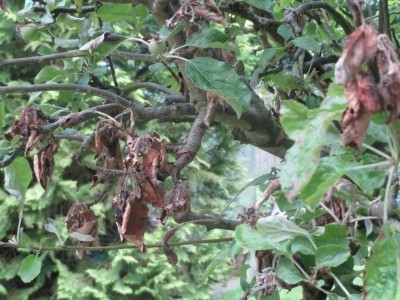
Fire blight, caused by the bacterium Erwinia amylovora, is a destructive disease that strikes trees and shrubs in orchards, nurseries, and home landscapes alike. No planting is entirely immune once this pathogen takes hold.
This disease typically emerges during seasonal weather shifts, targeting blossoms first before progressing to twigs and branches. The name "fire blight" comes from the scorched, blackened appearance of infected tissues, which look as though they've been burned by flame.
Signs appear as soon as active growth begins in spring. The earliest indicator is a light tan to reddish, watery ooze seeping from infected branches, twigs, or trunk cankers. Upon exposure to air, this exudate darkens, leaving conspicuous streaks on bark.
Blossoms turn brown and wilt, while twigs shrivel, blacken, and often curl into a characteristic "shepherd's crook" shape. As the infection advances, cankers form on branches — discolored, oozing patches teeming with bacteria. Severe infections can girdle limbs or even kill the entire plant.
The bacterium spreads easily via rain splash, insects, birds, contaminated tools, and infected plant material. Peak risk occurs in late spring to early summer when the pathogen emerges from dormancy. Unfortunately, no cure exists, so prevention and sanitation are critical.
Promptly prune out infected stems and branches, cutting well below visible symptoms. Sterilize tools between cuts using a solution of three parts denatured alcohol to one part water, or a 10% household bleach solution (one part bleach to nine parts water). Thoroughly dry and oil tools afterward to prevent corrosion. Avoid overhead irrigation, which splashes water and disperses the bacteria.
Because fire blight cannot be cured, control is difficult. Bactericides such as fixed copper products may reduce the pathogen's ability to survive and reproduce, but they are not reliably effective. Always read and follow label instructions carefully. In many cases, rigorous pruning and cultural practices remain the only viable approach.
Crab Apple Fire Blight Diagnosis: Lab Confirmation Needed Without Classic Symptoms
Fire Blight on Loquat: Pruning and Streptomycin Protocol
Fire Blight on Pear and Apple: Streptomycin Spray at Bud Break
Car Fire Heat Damage to Trees: Scratch Test Recovery
Fast, Professional Fire and Water Damage Restoration in New Hampshire
Powdery Mildew: Prevention, Hydrogen Peroxide Remedy & Host-Specific Strains
Old Cherry Tree Dead Leaves and Holes: Fire Blight—Prune, Spray, Remove Moss
Fire Blight on Chanticleer Pear: Aggressive Pruning and Blossom Sprays
Cleveland Select Pear Trees: Fire Blight Diagnosis and Management
Organic Dollarweed, Crabgrass & Fire Ant Control in St. Augustine
Fire and Ice Roses: The Striking Bi-Color Hybrid That Embodies Passion and Purity
Copyright © www.100flowers.win Botanic Garden All Rights Reserved