


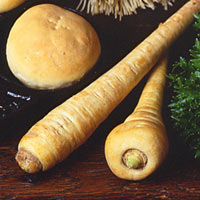
Popular with ancient Greeks and Romans, parsnips have been grown in America since colonial times. Though they take a long time to mature, their sweet, nutty flavor is worth the wait—delicious alone, in soups, and stews.
Parsnips require a long growing season (100–130 days). They tolerate frost and can be harvested just before the ground freezes or left in the ground over winter. Time sowing for harvest just after the average first fall frost. In mild winter areas, sow September–November. Buy fresh seeds each year.
Select a site with full sun to light shade and deep, well-drained soil. Loosen soil to 12–15 inches and mix in a 2- to 4-inch layer of compost.
Work soil at least a foot deep to remove rocks, clods, and obstructions. In heavy soils, form raised beds 4–6 inches high. Soak seeds 24 hours before planting. Sow ½ inch deep, 2 seeds per inch in rows or beds. In heavy soil, cover seeds with vermiculite for easier emergence. Parsnip seeds germinate slowly (2–3 weeks); mix in radish seeds to break soil and mark rows.
Thin established seedlings to 3–6 inches apart, depending on desired root size. Keep rows weeded with shallow cultivation. Water during summer if rainfall is less than 1 inch per week. Parsnips are generally pest- and disease-free.
For best flavor, harvest before the ground freezes but after a few frosts, or leave in the ground through winter. If storing in ground, cover with thick organic mulch. Harvest immediately after spring thaw.
Storing Drosera spatulata Seeds: Paper Pouch in Fridge
Sarracenia Seed Stratification: Still Time for Fridge Cold Treatment
Repotting Sarracenia Minor: Soil Mix and Seed Stratification
Using SuperThrive for Drosophyllum Seeds and Bareroot Plants
Sarracenia Seed Viability After Two Weeks at Room Temperature
Saving Sunflower Seeds for Next Year's Garden
How to Grow Chia (Salvia hispanica) in the Garden
Do Plants Have to Die for Their Seeds to Grow?
Eradicating Invasive Wiregrass (Bermuda Grass) Through Solarization
Kale Management: Harvest, Overwintering, and Seed Saving
Where Do Vegetable Seeds Come From? The Plant Life Cycle Explained
Growing Zinnias from Seed: Harvest, Sow, and Enjoy All Season
Copyright © www.100flowers.win Botanic Garden All Rights Reserved