A window box is instant curb appeal—a miniature garden at eye level that greets you every time you look outside. Whether you have a sunny south-facing ledge or a shady north exposure, the right plant combo delivers months of color with minimal effort. Here's how to choose, plant, and maintain a stunning window box.
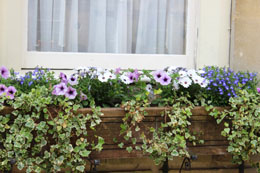
Before You Plant: 3 Key Questions
- Which way does the window face?
- South/West = full sun (6+ hrs) → choose sun-lovers.
- East = morning sun / afternoon shade → part-sun plants.
- North = full shade → shade-tolerant only.
- What's your maintenance tolerance? Self-watering boxes + drought-tolerant plants = lowest work.
- What's the look? Formal symmetry? Cottage chaos? Monochrome? Trailing drama? Pick a theme.
Top Plants by Light Exposure
☀️ Full Sun (South/West Windows)
- Petunia (wave/supertunia types bloom nonstop)
- Calibrachoa (million bells—petunia lookalike, heat-tough)
- Verbena (trailing, butterfly magnet)
- Lantana (heat-loving, clustered blooms)
- Geranium (Pelargonium) (classic, upright or trailing)
- Marigold (compact French types)
- Salvia (spiky, hummingbird favorite)
- Portulaca (moss rose—succulent, closes at night)
- Sweet Potato Vine (chartreuse or purple foliage trailer)
- Lavender (dwarf varieties, fragrant, needs excellent drainage)
🌤️ Part Sun / Morning Sun (East Windows)
- Impatiens (nonstop color, shade-tolerant)
- Begonia (wax, tuberous, or rex for foliage)
- Fuchsia (dangling jewels, loves cool mornings)
- New Guinea Impatiens (larger flowers, more sun-tolerant)
- Bacopa (tiny white/blue flowers, trailing)
- Lobelia (electric blue, trailing)
- Coleus (foliage star—pinch flowers for bushiness)
🌿 Full Shade (North Windows)
- Impatiens (classic shade workhorse)
- Begonia (especially rex for wild foliage)
- Coleus (color without flowers)
- Ferns (maidenhair, button, asparagus—texture)
- Heuchera (coral bells—mounded foliage)
- Hosta (mini varieties for boxes)
- Lamium (dead nettle—silver leaves, pink/white flowers)
- Viola / Pansy (cool-season color)
Design Formulas
| Style | Thriller (Tall) | Filler (Mounded) | Spiller (Trailing) |
|---|
| Classic Sun | Geranium | Petunia | Sweet potato vine |
| Romantic Shade | Fuchsia | Impatiens | Lobelia |
| Foliage Focus | Cordyline | Coleus | Creeping Jenny |
| Edible Mix | Dwarf tomato | Basil | Nasturtium |
Planting & Maintenance Essentials
- Box: Ensure drainage holes. Line with landscape fabric.
- Soil: Lightweight potting mix + slow-release fertilizer + water-retention crystals.
- Spacing: Plant tighter than in ground—boxes dry out fast.
- Water: Daily in summer heat. Check morning & evening. Self-watering reservoirs help.
- Deadhead: Pinch spent blooms weekly for continuous flowering.
- Fertilize: Liquid feed every 2 weeks (or use slow-release at planting).
- Rotate: Turn box weekly for even growth.
Edible & Fragrant Bonuses
- Herbs: Thyme, oregano, mint (contained), chives, basil.
- Edible flowers: Nasturtium, pansy, viola, calendula.
- Scent: Lavender, scented geranium, sweet alyssum, night-scented stock.
With the right plants for your exposure and a little routine, your window box becomes a living frame that changes with the seasons—no yard required.


