


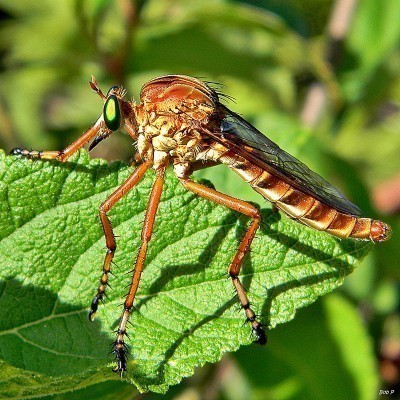
Robber flies (family Asilidae) look intimidating—large, hairy, humpbacked, and often bee-like—but they are among the most effective aerial predators in the garden. With over 1,000 North American species, they hunt a wide range of insects, including grasshoppers, flies, wasps, leafhoppers, Japanese beetles, and even the occasional bee or butterfly.
Size ranges from 3/8 to 1 1/8 inches. They perch on stems or fly low over open ground, darting out to snatch prey in midair. All life stages are predatory; larvae live in soil or decaying wood, feeding on beetle grubs and other soft-bodied insects. Adults inject prey with neurotoxic saliva and digestive enzymes, then suck out the liquefied contents.
Most species favor sunny, arid habitats—deserts, grasslands, forest edges. They are less common in dense shade or wet areas. If your garden has open, sunny patches with bare soil or sparse vegetation, you’re more likely to see them.
Robber flies rarely warrant control. Their predation on a few beneficial insects is vastly outweighed by their consumption of pests. If you must deter them, target soil-dwelling larvae by removing moist wood and debris where they hide. Bacillus thuringiensis (Bt) can kill larvae, but this also eliminates other beneficial soil insects. Never spray adults with broad-spectrum insecticides—you’ll destroy the very predators you want to keep.
Tolerate their formidable presence; robber flies are a sign of a diverse, functioning insect community.
Identifying and Managing Centipedes and Millipedes in Your Home
Identifying Leaves from a Katy Perry Costume: Silk, Not Real
Identifying Inherited Houseplants: Hoya, Zygocactus, Rex Begonia
Identifying and Organically Controlling Fast-Growing Grassy Weeds
Can You Save Brown Sod After a Missed Watering? Assessing Damage and Next Steps
Root Cuttings: How to Propagate Plants from Root Growth
Plant Hybridization: Creating New Varieties Through Selective Breeding
Centipedes in Greenhouse Orchid Pots: Harmless Predators
Garden Stepping Stones: Creative Pathways for Personal Expression
Identifying and Eliminating Ant Infestations in New Jersey
Soldier Fly Larvae in Compost: Gross? No—They're Helpers
True Lilies vs. Daylilies: Know the Difference & Design with Lilies
Hover Flies: Pollinators and Aphid Predators in One Package
Soldier Flies in Compost: Beneficial Larvae You Should Welcome
Copyright © www.100flowers.win Botanic Garden All Rights Reserved