


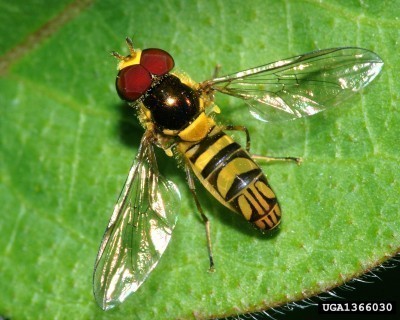
Hover flies (family Syrphidae), also called flower flies or syrphid flies, are bee/wasp mimics that hover like helicopters over flowers. Adults are important pollinators; their slug-like larvae are voracious aphid eaters, capable of controlling 70–80% of an infestation in established populations.
Females lay creamy white eggs near aphid colonies. Larvae hatch in 2–3 days, feed on aphids for several days, then attach to a stem and pupate in a teardrop-shaped cocoon. Adults emerge in ~10 days (longer in cool weather). Multiple generations per season.
Bright abdominal bands mimic wasps, deterring predators. Distinguish from wasps by: fly-type head (large eyes, short antennae), two wings (wasps have four), and the characteristic hovering flight.
Plant nectar-rich herbs and flowers with small, accessible blooms: oregano, garlic chives, sweet alyssum, buckwheat, bachelor’s buttons, cilantro, dill, fennel, and yarrow. Allow some aphids to persist on “banker plants” to sustain larvae. Avoid all insecticides. Hover flies are not sold commercially, but a diverse, pesticide-free flower border will attract them reliably.
These dual-role insects are a gardener’s dream: pollination by day, pest control by night.
Create Your Dream Garden with This Useful Information
Understanding the Root Zone: Key to Healthy Plant Watering
Bamboo in the Garden: Choosing, Growing, and Containing
Silver in the Garden: Using Silver-Foliage Plants for Texture and Contrast
Designing with Green in the Garden: The Ultimate Foliage Color
Tachinid Flies: Tiny Parasitoids That Control Garden Pests
A Primer of Garden Plants: Choosing and Caring for Every Category
Multiple Plants Dying in Garden: Suspect Fungal, Drainage, or Rodent Issues
Planning a Raised Bed Garden in Santa Clara, CA
Bee-Free Window Plantings: Foliage Plants & Bloom Removal
Caring for Your Flower Garden: Essential Tips for Healthy Blooms
Achieve Your Most Beautiful Garden: Organic Strategies for Health and Savings
Garden Superstitions: The Evil Eye and the Black Thumb
Using Copper in the Garden: Fungicide, Bactericide, and Slug Control
Copyright © www.100flowers.win Botanic Garden All Rights Reserved