


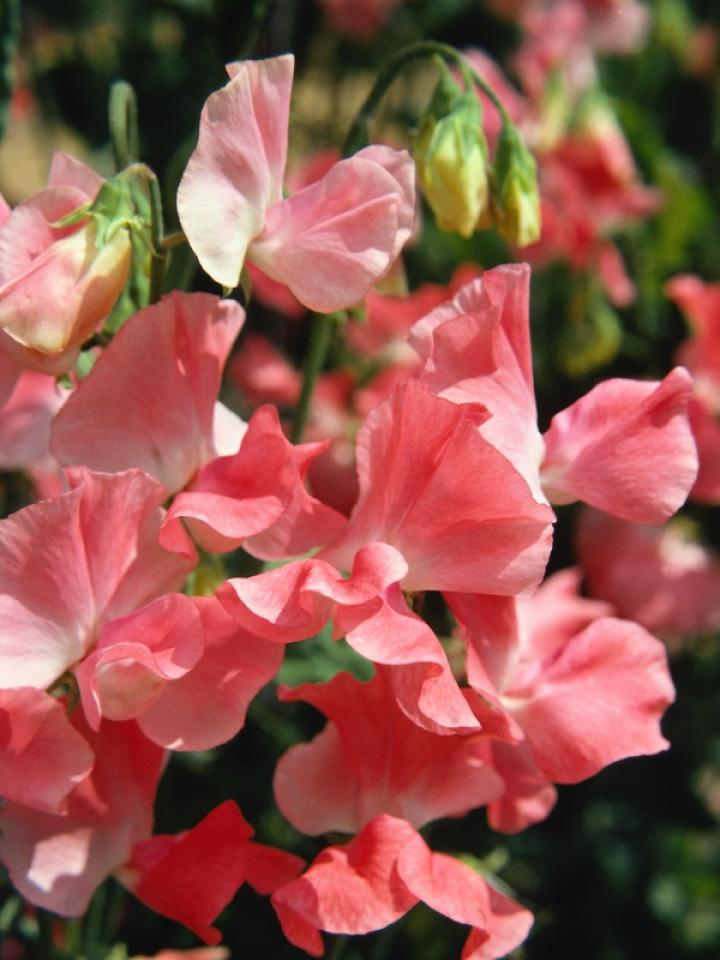
Sweet peas enchant with fragile, seductive fragrance and make superb bouquets. These pea-like flowers come in many lovely colors for annual borders, woodland gardens, trellises, or arches.
Sweet Pea
(Delicate Pleasures)
"Here are sweet peas, on tip-toe for a flight
With wings of gentle flush o'er delicate white,
And taper fingers catching at all things
To bind them all about with tiny rings."
–John Keats (1795–1821)
Cultivated 300+ years. Native Sicily: weak stems, intense orange-jasmine-honey scent. Modern hybrids: stronger stalks, larger blooms.
Growing sweet peas is like making piecrust—some have the knack, others don't. They're hardy from large, easy-to-handle seeds but tricky due to slow germination. Experiment with different seeds yearly.
"The odor of the sweet pea is so offensive to flies that it will drive them out of a sick-room, though not in the slightest degree disagreeable to the patient."
–A tip from The 1899 Old Farmer's Almanac
Aster Growing Guide: Plant, Care for, and Enjoy These Fall Bloomers
Crocus Planting Guide: Early Spring Color That Naturalizes Beautifully
Daffodils: Complete Guide to Planting, Growing, and Caring for Spring's Cheerful Blooms
Dahlias: Expert Guide to Planting, Growing, and Storing These Summer Showstoppers
Cosmos: How to Plant, Grow, and Care for These Airy Annuals
Hyacinths: Growing Fragrant Spring Blooms Outdoors and Indoors
Lilies: How to Plant, Grow, and Care for True Lilies (Lilium)
Marigolds: Easy-Care Annuals for Nonstop Summer-to-Frost Color
Morning Glories: Growing Romantic Vines for Summer-to-Frost Blooms
Peonies: Planting and Growing These Long-Lived Spring Showstoppers
Sweet Peas: Growing Fragrant Climbers for Bouquets and Garden Charm
Tulips: Planting Bulbs for Spring Color from Early to Late Season
Copyright © www.100flowers.win Botanic Garden All Rights Reserved