


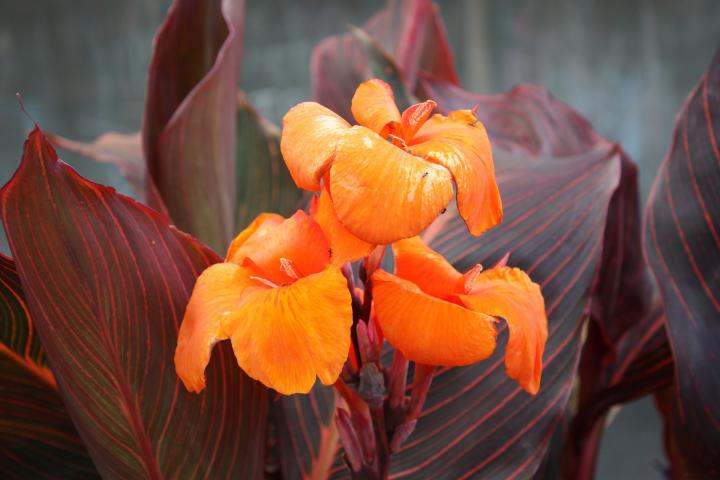
Few summer bulbs bring such flamboyant, tropical drama to the garden as cannas. With their towering reedy canes, immense paddle-shaped leaves in shades of green or bronze, and ruffled flower spikes that bloom from early summer until frost, these perennials are showstoppers whether in borders, containers, or waterside plantings.
Native to tropical America, cannas offer bold foliage and vibrant blossoms in a spectrum of reds, oranges, yellows, pinks, and salmons. Their architectural presence alone—reaching 3 to 10 feet depending on variety—makes them worth growing even before the flowers appear. They thrive in heat, tolerate moist soils, and ask for little beyond sun and consistent moisture.
Note: Growing from seed is possible but germination is low and seeds require scarification (filing or acid bath). Most gardeners purchase rhizomes for reliable results.
Cannas are thirsty plants. Provide at least 1 inch of water per week, more during dry spells. A thin layer of organic mulch helps retain soil moisture and suppress weeds.
Apply a balanced fertilizer monthly during the growing season to support vigorous growth and continuous bloom.
In frost-free areas, cannas can remain in the ground year-round. Every 3–4 years, dig and divide crowded clumps in winter, replanting in enriched soil. Some zone 7 gardeners successfully overwinter cannas in situ with a heavy mulch blanket.
Good air circulation, clean cultivation, and prompt removal of affected foliage minimize problems.
In spring, cut stored rhizomes with a sharp knife so each division has at least one strong eye and a substantial piece of rootstock. Plant divisions as you would whole rhizomes.
“Flowers are words which even a babe may understand.”
— Arthur Cleveland Coxe, American poet (1818–1896)
Aster Growing Guide: Plant, Care for, and Enjoy These Fall Bloomers
Crocus Planting Guide: Early Spring Color That Naturalizes Beautifully
Daffodils: Complete Guide to Planting, Growing, and Caring for Spring's Cheerful Blooms
Dahlias: Expert Guide to Planting, Growing, and Storing These Summer Showstoppers
Hyacinths: Growing Fragrant Spring Blooms Outdoors and Indoors
Lilies: How to Plant, Grow, and Care for True Lilies (Lilium)
Marigolds: Easy-Care Annuals for Nonstop Summer-to-Frost Color
Morning Glories: Growing Romantic Vines for Summer-to-Frost Blooms
Peonies: Planting and Growing These Long-Lived Spring Showstoppers
Sweet Peas: Growing Fragrant Climbers for Bouquets and Garden Charm
Tulips: Planting Bulbs for Spring Color from Early to Late Season
Delphiniums: Planting, Growing, and Care for Majestic Spikes
Copyright © www.100flowers.win Botanic Garden All Rights Reserved