


Few flowers command attention like the massive, pendulous trumpets of Brugmansia or the upright, spiny-podded blooms of Datura. Known collectively as "Angel's Trumpets," these Solanaceae relatives intoxicate with evening fragrance and tropical drama—but every part is profoundly toxic. Growing them requires knowledge, caution, and respect.
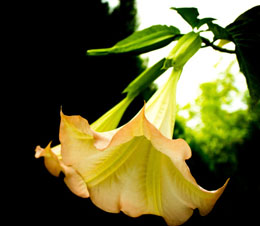
| Feature | Brugmansia (Angel's Trumpet) | Datura (Thorn Apple / Jimsonweed) |
|---|---|---|
| Growth Habit | Woody shrub/small tree (3–11 m) | Herbaceous annual/short-lived perennial (1–2 m) |
| Flower Orientation | Pendulous (hanging down) | Upright/erect |
| Flower Size | Up to 50 cm long, 35 cm wide | ~20 cm long, 12 cm wide |
| Fruit | Smooth, fleshy berry | Spiny capsule |
| Longevity | Perennial, woody | Annual/biennial |
| Native Range | South America (Andes) | Americas, globalized weed |
Both genera have ancient shamanic/medicinal use in South Asia and the Americas for asthma, pain, and ritual trance. Modern medicine uses purified alkaloids (scopolamine for motion sickness, atropine for cardiac arrest). Home preparation is lethal—dose margin is negligible.
If you have the expertise, space, and safety measures, Angel's Trumpets offer unparalleled tropical grandeur. For most gardeners, admiring them in conservatories or botanical gardens is the wiser choice.
Utilizing a Wild Passionflower Field: Edible, Medicinal, and Commercial Uses
Top Flowering Plant for Nursing Home: Kalanchoe
Aloe Vera Flower Stalk: Remove After Blooming
Reviving Stressed Perennials After Early Frost and Drought: Safe Transplanting Practices
Identifying Flowering Plants by Leaves Alone
Container Flower Basics: Soil, Drainage, Fertilizer, and Sun/Shade Picks
Balcony Flowers for a Windy, Ocean‑Front 15th Floor: Low‑Bug, Heat‑Tolerant Picks
Most Fragrant Container Plants for Northern New Jersey Decks
Full-Sun Deck Flowers: Annuals for Continuous Bloom and Heat Survival
Iris in the Garden: Bearded, Siberian, Japanese & More — A Complete Growing Guide
Copyright © www.100flowers.win Botanic Garden All Rights Reserved