


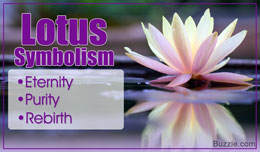
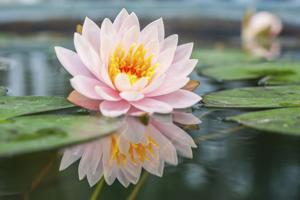
 The lotus is the national flower of India and Vietnam because of its cultural significance, symbolism, and popularity.The lotus (Nelumbo nucifera) is an aquatic perennial plant that belongs to the family Nelumbonaceae. It is also called Sacred Lotus and Indian Lotus. In Sanskrit (the ancient language of India), the lotus is known by various names like, Pundarika, Padma, Kamala, Utpala, etc.
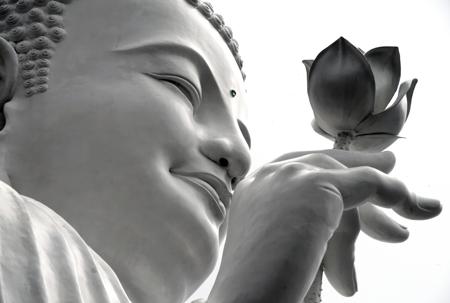 The lotus flower forms the principles of the Eightfold Path, one of the highest teachings of Lord Buddha. In Buddhism, it is the symbol of purity, faithfulness, and spiritual awakening. The flower lifts itself above the muddy water, which represents the act of rising above all desires and attachments - the key to achieving spiritual enlightenment. Though the flower has its root in the mud, it grows upward in the direction of light, which represents the aspiration to rise above and move towards the light. In other words, it represents the journey from darkness (represented by the muddy pond) to the light of knowledge or wisdom. A Buddhist mantra describes the lotus saying, Om mani padme hum, which means Hail, the jewel in the lotus.
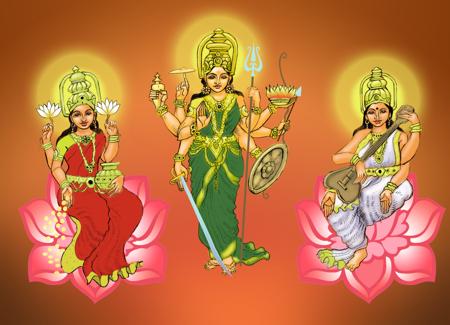 The lotus flower is regarded sacred and has religious connotations in Hinduism. It represents the energy centers of our body, known as chakras, and is associated with beauty, prosperity, knowledge, fertility, and above all, eternity and spirituality. The lotus is associated with several Hindu deities. For example, the Hindu goddess of prosperity, known as Lakshmi is always depicted to be seated on a fully blossomed lotus, showering her generosity upon mankind. She is said to be born of the pink lotus. Even the Hindu god of creation, Brahma is believed to emerge from a lotus that sprung from the navel of Lord Vishnu, the sustainer or the preserver of the world.
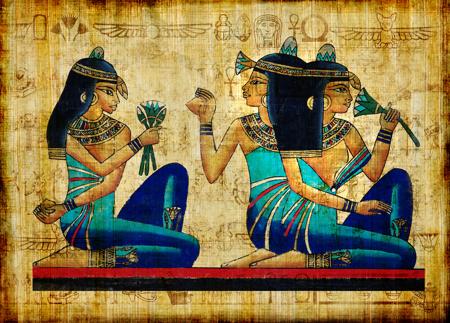 In Egyptian culture, the lotus was known by the name Seshen. It represents the sun and rebirth. The flower blossoms with sunrise and closes as the sun goes down, hence the association with rebirth and the sun. It is also associated with several legends, which describe the creation of sun and the sun God 'Aton Ra'. According to one legend, the sun actually rose out of a lotus, while another legend states that a lotus emerged from the infinite ocean, called 'Nun', and when the flower bloomed, it revealed the Egyptian sun god. The goddess Isis is also believed to be born of a lotus. The blue lotus, especially, is highly revered in Egypt.
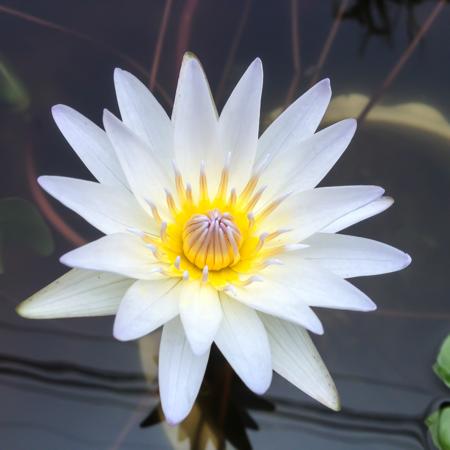 Perhaps the most enchanting flower with its unblemished pure white beauty, the white lotus is the most revered in the world, and is known as the 'Womb of the world'. It is said to denote the purity of mind (Bodhi), the calmness and serenity of human nature, and spiritual perfection. The white lotus is associated with the female representation of Buddha, which is goddess White Tara, as it aptly describes her nature. In an ancient Indian text, the white lotus is described as: The white lotus, born in the water and grown in the water, rises beyond the water and remains unsoiled by the water. Thus, monks, the [Buddha], born in the world, grown up in the world, after having conquered the world, remains unsoiled by the world.Pink Lotus
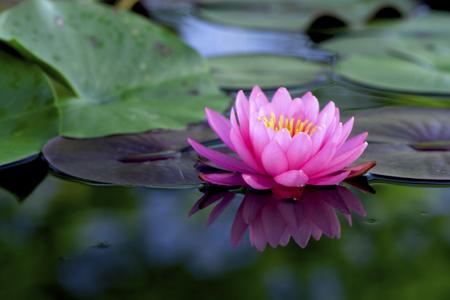 The delicate pink lotus holds a supreme and sacred place, and is highly revered. It is purely associated with the highest deities across cultures, and is the earthly symbol of Lord Buddha. This is also the reason, all the important Hindu gods and goddesses and also 'Buddha' are shown seated on a pink lotus. The pink lotus denotes the state of a person's mind. i.e. a closed bud represents the stage where he is transcending to the path of spirituality, whereas a full-bloom pink lotus means enlightenment or the stage where nirvana is attained.Red Lotus
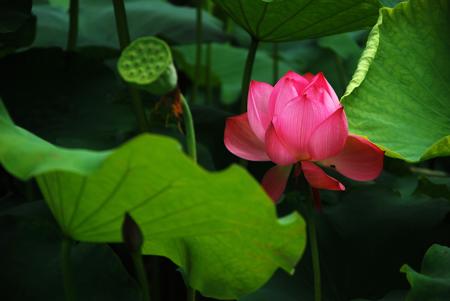 The red lotus stands for the heart (hridaya), and symbolizes selfless love, passion, compassion, and kindness. A fully bloomed red lotus symbolizes big-heartedness and generosity. It is also associated with Avalokitesvara, who is a 'bodhisattva', the 'Lord who looks down at the world', or Padmapani, meaning, 'Holder of the lotus'. Avalokitesvara is also known as the God of compassion, which aptly reasons his association with the red lotus.Blue Lotus
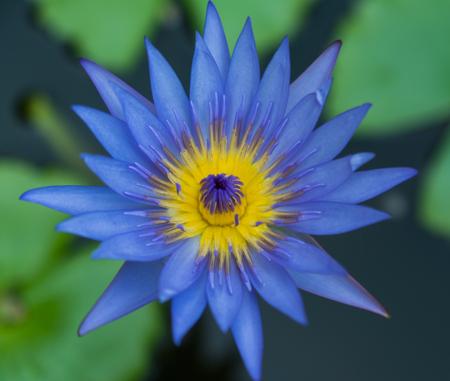 The blue lotus signifies wisdom and knowledge, and stands for the victory over the senses. It has a special and sacred place in Egyptian culture, and is rare to spot. It defines a person's control over his mind and spirit, to let go the materialistic aspirations in life and rise to a selfless soul. The blue lotus flower is not fully open, the bud is closed towards the center, which is never revealed. This state of the flower (the partially opened bud here) gives a message that one should not stop learning and attaining wisdom in life. It is associated with the Bodhisattva of wisdom, known as Manjushri, and Prajnaparamita, the one who signifies the 'perfection of wisdom'.Purple Lotus
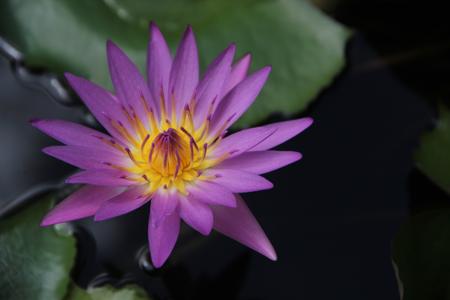 The purple lotus signifies mysticism, and represents the esoteric sects of Buddhism. It is unique and rare, and stands as a symbol of spirituality in some cultures. This flower is portrayed either as a bud, i.e. closed towards the core, or full-bloomed, which reveals the heart. The purple lotus arises from a single stem, five-fold, or triple stem. The triple stem indicates the three parts of the Garbhadhatu, (mainly: Lotus, Vairocana and Vajra), the five-fold stem defines Vajradhatu and its five knowledge, whereas the eight petals symbolize the most important teachings of Buddha, which is the Eightfold Path of Buddhism.
 The lotus flower also bears symbolism in Chinese culture. People in China love the flower for its purity and dignity. The beauty of this flower inspires artworks, poems, architecture, and design in Chinese culture. The lotus grows elegantly out of the muddy waters, unaffected and untouched by dirt and impurities, so it is considered supreme among all flowers, and is often compared to a person with strong virtues and moral values. In traditional Chinese culture, Bing Di Lian, meaning "twin lotus flowers on one stalk" is used to refer to a married couple.In Christianity, lotus is replaced by the white water lily. It is sacred and associated with the holy mother Mary. It represents divinity, holiness, purity, and fertility. In most of the Christian churches, white lily is depicted as the emblem of the Annunciation by Archangel Gabriel to the Virgin Mary.Since several parts of a lotus are edible, the Native Americans defined this flower as the ultimate power of the sun, to transform energy into food.In modern times, lotus is one of the most popular flowers, to be used for tattooing, mainly due to the meanings attached to it. A lotus tattoo signifies that it is always possible to overcome the trials and tribulations of life to attain fulfillment and perfection.The lotus flower is revered by the Taoists as well. In the Taoist culture, the flower signifies a way of life based on morality, purity, wisdom, and harmony.To sum up, lotus is one of the few flowers that has fascinated mankind from time immemorial, with its exotic and mysterious beauty. Lotus also inspires the human mind to achieve perfection, even in the adversities of life.
Copyright © www.100flowers.win Botanic Garden All Rights Reserved