


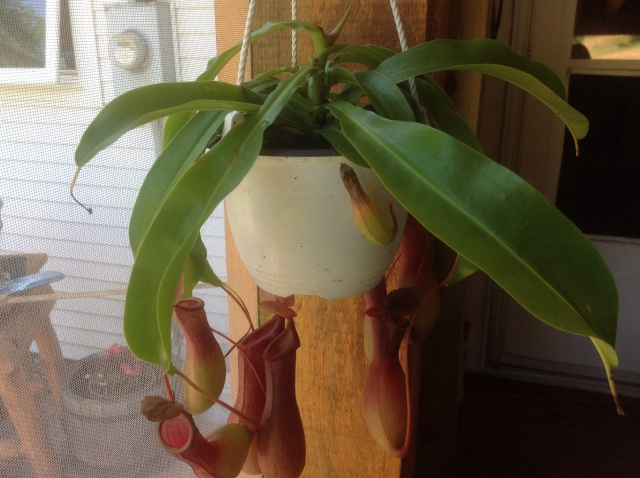
Picture of burnt pitch
I have an Asian pitcher plant that had been doing fine on my patio. But yesterday it was a little bit colder with a lot of wind. I also put it in sunlight longer than I usually do—I move it just outside of my patio for more sunshine every day for a few hours. The day after, the tops of some of the pitchers turned brown. I am wondering if I burnt them in the sun or if it was the weather or something else altogether. Any help would be great.
Answer
Hi Becky,
What you have is just an older pitcher dying off; nothing unusual there. However, you’re doing what I call “Move it here, Move it there” Syndrome. All plants hate that. What happens is you keep changing the microclimate, and they never have a chance to adapt to the local light, humidity, etc. This is one of the best ways I know to make a Nepenthes stop producing pitchers.
What you want to do is find a spot that seems suitable and leave the plant there. If you’re going to leave it out for the summer, leave it out. It should be a spot with partial sun—best if it’s east-facing for morning sun, but not the hot afternoon sun. It’s fine to stay out until temperatures start dropping below 50°F, then it would need to come in. Placing it under the partial shade of a tree also works very well.
If you don’t have that kind of location, find a sunny window in the house and park it there. Indoors you want a very sunny window since glass blocks most UV light. You will need a location like this for winter anyway.
Here’s more information on growing Southeast Asian Pitcher Plants: https://www.growcarnivorousplants.com/Articles.asp?ID=266
Good Growing!
Jeff Dallas
Sarracenia Northwest
https://www.growcarnivorousplants.com
GPM Calculations for Pool Drain – Pipe Sizing by Velocity
Chipmunks Burrowing at the Foundation: Fire and Flea Risks
Plant Selection Advice Without Photos
White Fuzzy Mold on Orchid Roots in Terrarium: Mealybugs or Fungus?
Natural Support for Ocular Rosacea: Nutrients, Herbs & Diet
Cardamom (Elettaria cardamomum): Botany, Properties & Culinary Uses
Partial Sun vs. Partial Shade: Decoding Garden Light Requirements
Indoor Azalea Care: Light, Water, and Fertilizer
Identifying Spanish Thyme or Swedish Ivy: Care for Plectranthus Varieties
Identifying a Mystery Houseplant: Large Green Leaves with Coral Stems
Decoding Light Labels for Houseplants
Growing Edible Ginger from Store-Bought Rhizomes: Light, Height, and Division
Hollyhock Stalk Borer: Identifying and Managing This Destructive Pest
Transplanting Large Artemisia: Timing and Variety-Specific Advice
Copyright © www.100flowers.win Botanic Garden All Rights Reserved