


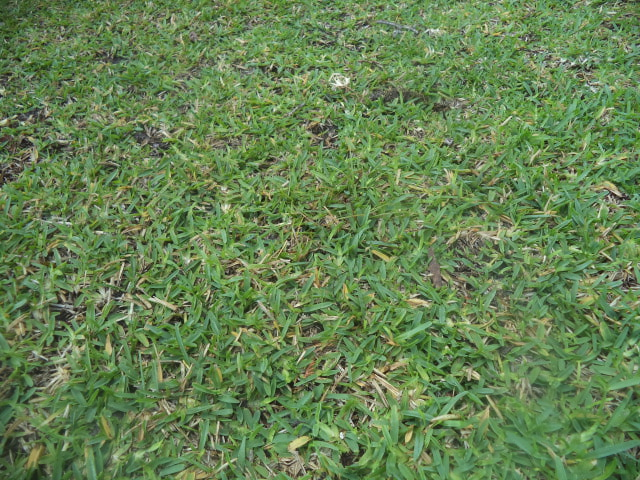
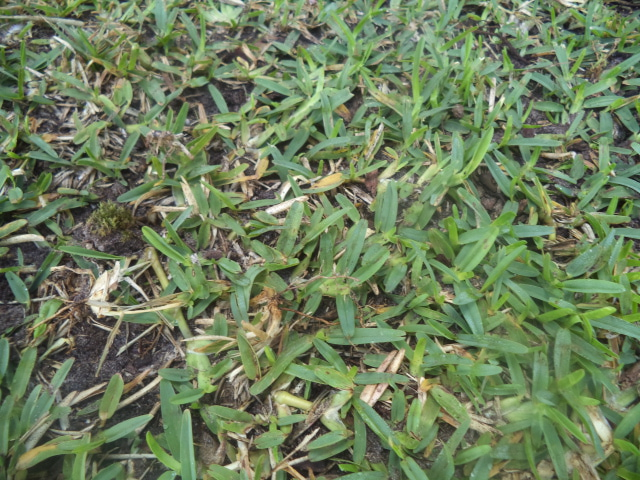
It’s nearly impossible to pinpoint the exact St. Augustine cultivar from photos alone. For a definitive ID, dig a large plug from each area and take it to a reputable nursery or your County Extension Office.
St. Augustine typically needs about 1 to 1.5 inches of water per week, delivered in one or two deep sessions rather than daily light sprinklings. Adjust for rainfall, soil type, and season. A soil probe or screwdriver test (push it into the soil; it should slide easily to 6 inches) helps gauge moisture depth.
Keep newly planted areas consistently moist (not soggy) for the first 2–3 weeks until roots establish.
Preparing Soil and Watering New St. Augustine Sod
St. Augustine Decline: Torpedograss, Nutsedge, Chinch Bugs, Spittlebugs
Mixing Bermuda into Damaged St. Augustine Lawn
Fixing Yellow St. Augustine Grass: Nutrient Deficiency Solutions
St. Augustine Yellowing After Rain? Likely Brown Patch Fungus—Organic Cure
Grass Seed for Shady, Sloped Play Area in Huntington, NY
Choosing Dog-Tolerant Grass for Shady Indiana Yards: Tall Fescue vs. Groundcovers
St. Augustine Freeze Damage: Light Nitrogen and Patience
St. Augustine Grass: Stolons, Brown Spots, and Common Problems
Yellow St. Augustine: Check for Thatch, Not pH
Growing St. Augustine Grass Under Trees: Shade Solutions and Watering Strategies
St. Augustine Lawn Care: Diagnosing Brown, Straw-Like Grass and Fire Ant Issues
St. Augustine Grass Yellowing from Pool Backwash: Chlorine Damage Remediation
Choosing the Darkest Green Grass Seed for Western Washington
Copyright © www.100flowers.win Botanic Garden All Rights Reserved