


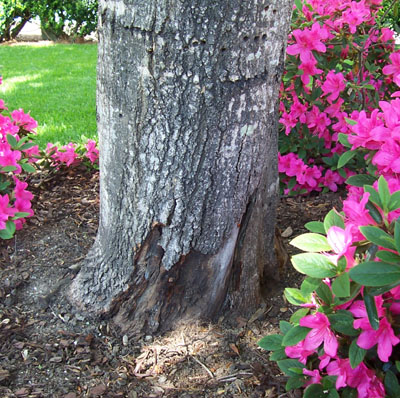
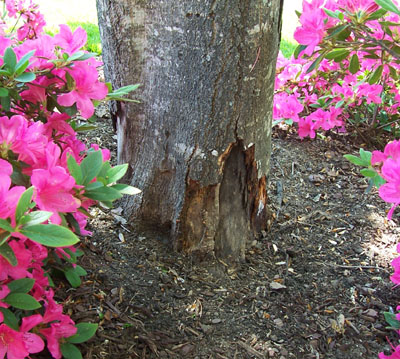
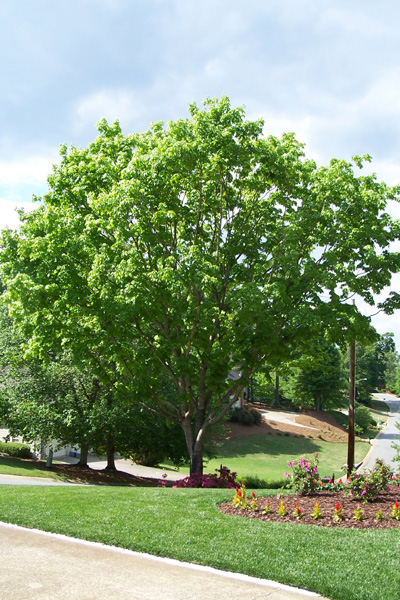
A sugar maple that’s thrived for two decades suddenly shows bark splitting and peeling near the ground. The exposed wood looks rotten and brittle, yet the canopy remains full and healthy. No lawn equipment has damaged the trunk. What’s going on?
In most cases, this exact symptom traces back to one of two planting or maintenance errors: the tree was set too deep in the hole, or years of mulch volcanoes have buried the root flare. Both create constant moisture against the bark, inviting fungal decay that weakens and eventually splits the lower trunk.
Look at the base of your tree. Can you see the flare—where the trunk widens and the first major roots spread outward? If soil or mulch covers that transition zone, the bark stays wet, loses its protective integrity, and becomes a buffet for wood-decay fungi.
If the canopy stays vigorous and the decay hasn’t girdled more than 25–30 % of the circumference, the maple can live for decades more. The key is stopping the moisture trap now. Recheck the base annually—mulch creeps back faster than you’d think.
Pear Tree Leaf Wilt and Blackening: Overwatering and Fungal Risk
Norway Maple Leaf Scorch: Drought and Transplant Shock, Not Iron
Sugar Maple Planting Distance from Foundation: Branch vs. Root Concerns
Maple Dripping Sap: Aphids or Scale and Systemic Fix
Sugar Maple Root Damage from Edging: Recovery Through Fertilization
Black Spots on Sugar Maple Trunk: Borers or Bleeding Canker?
Sunset Maple Decline After Root Damage
Japanese Maple Leaf Spots: Phyllosticta Leaf Spot Diagnosis and Management
Saving Sugar Maples from Borer Damage
Maple Syrup Production: Sugar Yield Per Tree
Japanese Maple Summer Planting in Chicago: Wrong Time, High Stress
Copyright © www.100flowers.win Botanic Garden All Rights Reserved