


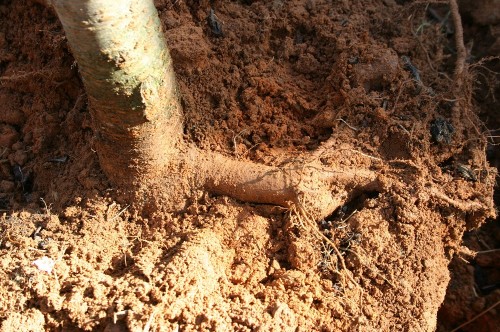
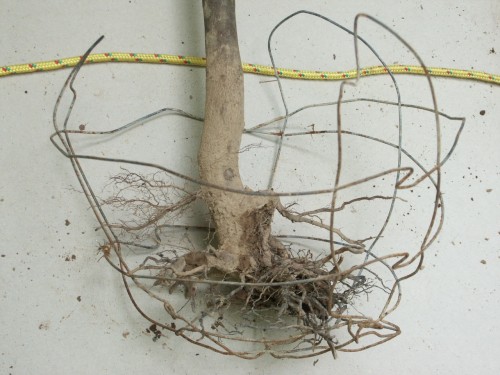
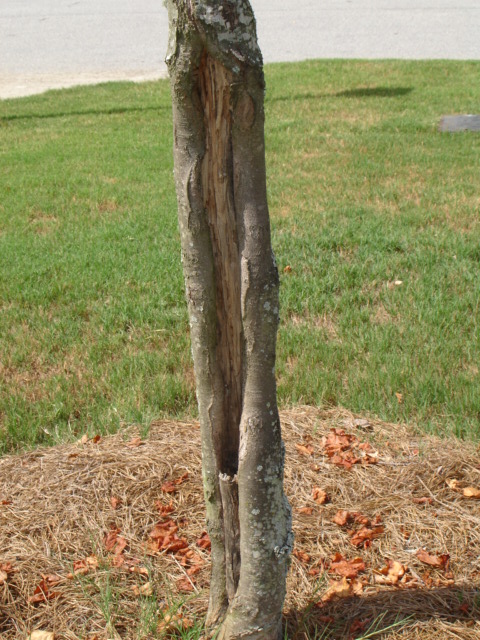
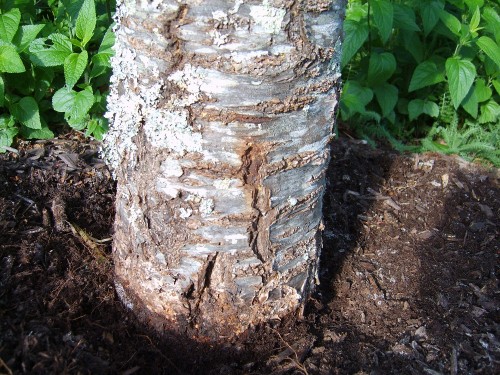
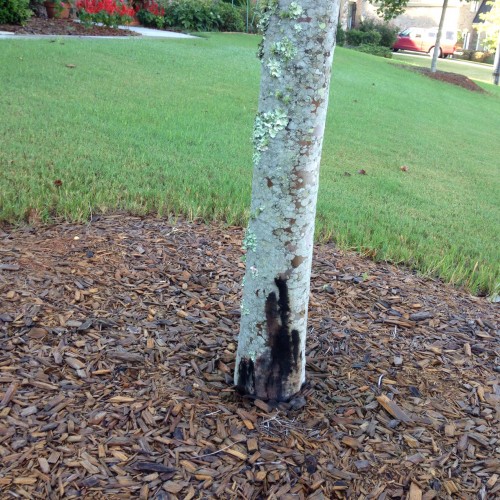
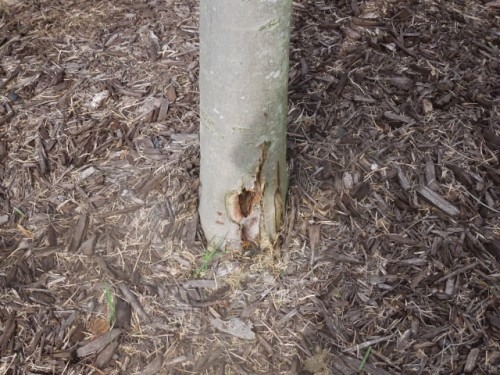
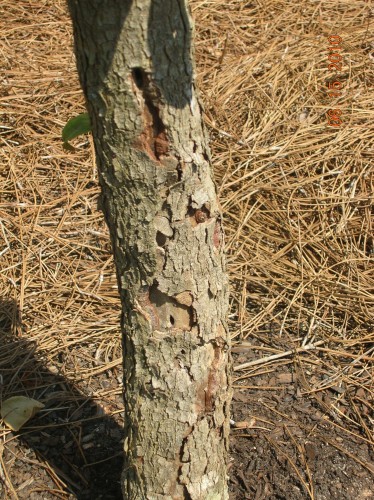
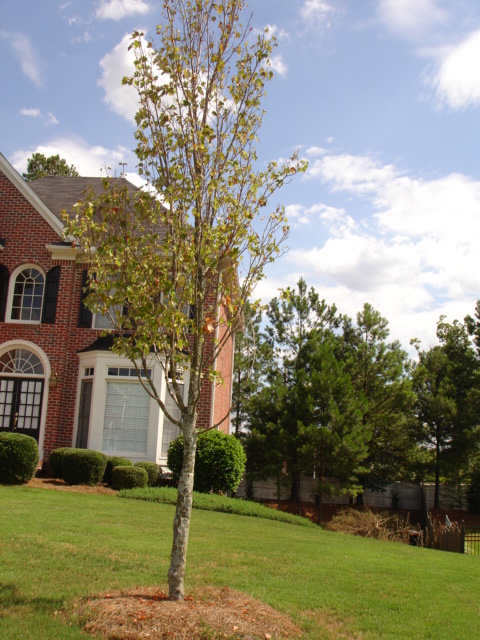
A declining young tree with peeling, splitting bark at the base is often a victim of deep planting. In heavy clay soils, tree roots spread horizontally like a pancake—no taproot. Balled-and-burlapped (B&B) trees frequently have their first major "flare root" buried deep in the root ball. If planted with the ball's top at grade, that flare root ends up inches too deep, leading to girdling roots, rot, and slow death.
Always locate the first major root and plant it within 1 inch of the soil surface. Remove excess soil from the top of the root ball before planting. The root flare must be visible.
Once bark rots and girdling roots strangle the trunk, the tree cannot be saved. Prevention at planting is the only cure.
Photos illustrate: proper flare root, buried root ball, and cherry/maple/dogwood trees killed by deep planting.
Overwatering Kills Newly Planted Leyland Cypress
Sunburst Locust Bare-Root Not Leafing: Transplant Shock, Wait
Summer-Planted Cottonwood in Wyoming: Managing Transplant Stress
Moving a 4-Year-Old Fan West Ash in Phoenix: Pro Equipment Needed
Stagnant Purple Beech: Fertilize and Mulch to Jumpstart Growth
Assessing Planting Depth in Established Trees
Managing a White Birch Too Close to the House: Topping vs. Selective Pruning
Pear Tree Leaf Wilt and Blackening: Overwatering and Fungal Risk
Cold Stratification for Cypress and Cedar Seeds: Fridge Method
Rejuvenation Pruning for Old Crape Myrtle
Knock Out Rose Tree Planted Outdoors Shows No Growth
Live Oak vs. Hardscape in Orlando: Root Barriers, Forester Consultation, and Compromise
Money Tree (Pachira) Brown Leaf Tips: Causes and Fixes
Tall Palm-Like Plant Bending: Identification Needed Before Action
Copyright © www.100flowers.win Botanic Garden All Rights Reserved