


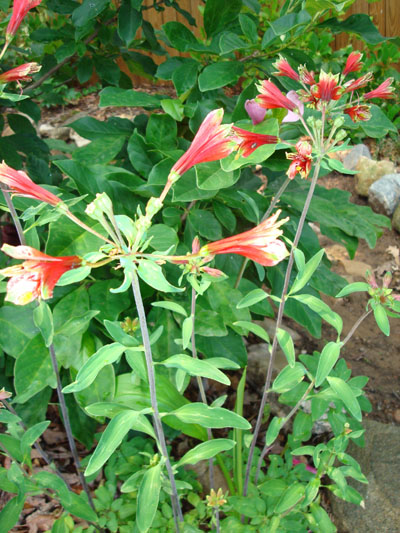
The plant described—3 feet tall, few leaves, trumpet-shaped red flowers—is Alstroemeria psittacina, commonly called parrot lily or parrotlily. It prefers shady, moist conditions and often appears near bird feeders where dropped seeds create favorable microclimates.
While the foliage may look sparse, the exotic blooms are striking. Parrot lily spreads via tubers and can naturalize in suitable spots. It's not long-lived as individual stems, but the colony persists.
Golden Larch vs. Common Larch: Clearing Up the Confusion
Society Garlic: Seed Collection and Deer Resistance
Lanceleaf Greenbriar: Thornless Vine with Edible Shoots
Barred Owl: The "Who Cooks for You?" Hunter
Bloody Dock (Rumex sanguineus): Ornamental or Invasive?
Creasy Greens: The Spring Tonic Wild Cress
Turtlehead (Chelone lyonii): Native Perennial for Damp Shade
Possum Grape (Ampelopsis cordata): Colorful Vine, Weedy Habit
Longleaf Pine: From Grass Stage to Bottlebrush
Rosinweed (Silphium compositum): Taprooted Native Perennial
Identifying Black Cherry Trees in the Landscape
Jatropha: Ornamental Shrub with Biodiesel Potential
Twining Snoutbean: Native Legume, Not a Weed
Copperhead Snake Identification: Venomous—Observe, Don't Touch
Copyright © www.100flowers.win Botanic Garden All Rights Reserved