


Meet Priscilla, a split-leaf philodendron that's thrived for over 12 years. Each winter, she occupies a dim living room corner where sunlight barely reaches. The result? Browning leaves and dying stalks. Yet come summer, when moved outdoors, she rebounds spectacularly. This cycle reveals a clear message: Priscilla isn't getting enough light indoors, even for a low-light tolerant philodendron.
While philodendrons survive in low-light conditions, "surviving" isn't thriving. If you can't move the plant outdoors year-round, supplemental lighting is essential. The solution is simpler than you might think.
Head to a hardware store and purchase a shiny aluminum clamp light fixture. Pair it with a fluorescent bulb equivalent to a 100-watt incandescent (typically 20–25 watts). The critical detail? Position the fixture as close to the foliage as possible. Fluorescent bulbs lose effectiveness beyond four feet, providing almost no usable light for plants at that distance.
Opt for warm white or daylight bulbs. These mimic the outdoor light spectrum more closely, giving your plant the wavelengths it needs for photosynthesis and healthy growth.
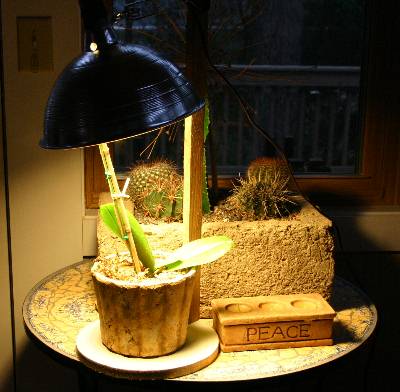
An example of a clamp light illuminating an orchid
Desert Rose (Adenium obesum) Care: Light, Water, and Dormancy
Identifying and Caring for Your Chinese Evergreen (Aglaonema commutatum)
How to Assess Light Levels for Healthy Houseplants
Houseplant Light Guide for Solar-Screened Las Vegas Home
Mealybugs on Succulents: Identification and Alcohol Treatment
Plant Leaning Away From Light: Identify Species First
Yucca Houseplant in Oversized Pot: Downsize Immediately
Scottish Houseplant: Possible Haemanthus (Blood Lily)
Houseplant Bulbs: Energy Storage for Seasonal Blooms
Kohleria: The Easy-Care Tropical Bloomer
Wax Plant (Hoya): Fragrant Star Clusters on Long-Lived Vines
ZZ Plant (Zamioculcas zamiifolia): Ultimate Low-Maintenance Care Guide
Copyright © www.100flowers.win Botanic Garden All Rights Reserved