


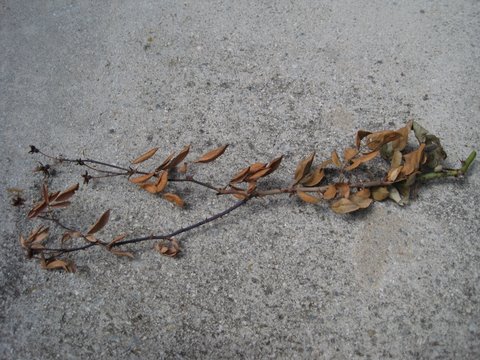
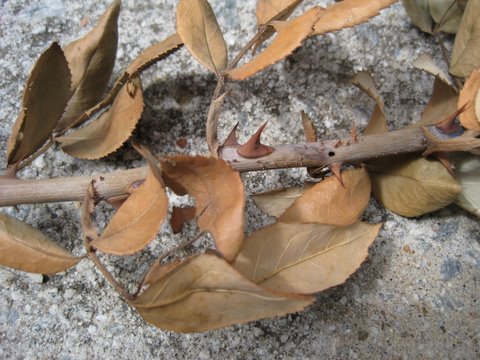
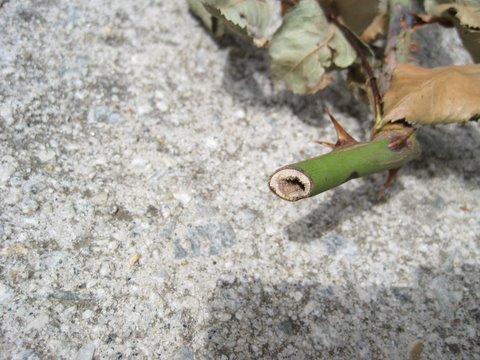
If your Knockout roses are mysteriously yellowing and dying, with small holes visible in the canes, you're likely dealing with rose cane borers. These pests are the larvae of various insects—including certain wasps and beetles—that lay eggs on freshly pruned rose stems in spring. Once hatched, the larvae tunnel into the soft pith at the center of the cane, feeding their way downward. The damage cuts off water and nutrient flow, causing foliage above the infestation to yellow, brown, and eventually die.
Unfortunately, there are no effective sprays that reach larvae once they're inside the cane. The standard approach is to prune out damaged canes as soon as you spot them, cutting well below the last visible hole into healthy green wood. But prevention is far easier than cure.
When pruning your roses in early spring, seal every cut immediately with a dab of white glue (like Elmer's) tinted with a drop or two of food coloring. The colored glue makes it easy to see which cuts have been treated. This physical barrier prevents female borers from accessing the exposed pith to lay eggs. It's a low-cost, chemical-free method that many rosarians swear by.
Why Your Roses Aren't Blooming: Troubleshooting Tips for High-Altitude Gardens
Saving a Failing Tree Rose: Convert to Rugosa Bush
JFK Rose Turned Red—Rootstock Takeover
Growing Climbing Roses in Pots on a Patio: Best Varieties and Care
Growing Roses in Kihei, Maui: Heat, Soil, and Variety Selection
Propagating Roses from Cuttings – Not by Division
Why Roses Fail in Coal Ash and Pine Tree Areas
Why Roses Turn Into Red Climbers – Reversion Explained
Rust, Black Spot, and Aphids on Climbing Roses in San Ramon, CA
'Nearly Wild' vs. Flower Carpet® Roses: The Real Differences Beyond Photos
Growing Roses from Hips: Seed Propagation Guide & Genetic Reality
Tree Rose Winter Survival in Southern NJ: Garage + Plumber's Insulation
Copyright © www.100flowers.win Botanic Garden All Rights Reserved