


When a well-meaning relative tops your Japanese maple, the resulting explosion of watersprouts requires strategic thinning to restore structure and beauty.
Topping removes the terminal bud's apical dominance, triggering dormant buds to break simultaneously. The result: dense clusters of weakly attached shoots at each cut.
If you prefer a smaller tree, maintain the reduced height through regular pruning. Japanese maples respond well to continuous size management. For natural form, allow selected leaders to develop into a new canopy over several years.
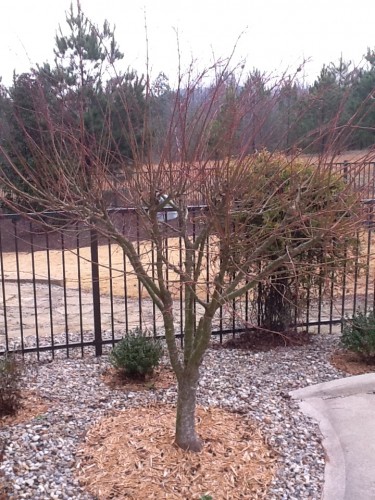
Coral bark maple after topping—dense watersprout clusters at each cut
Japanese Maple Transplant Shock and Leaf Scorch
Reviving a Dwarf Japanese Maple: Solving Leaf Color Change and Dry Tips
Japanese Maple Leaf Scorch and Transplant Shock: Same Symptoms, Different Causes
Japanese Maple Leaf Spots: Phyllosticta Leaf Spot Diagnosis and Management
Choosing the Right Fertilizer Spikes for Japanese Maple Trees
Valuing a Damaged Dwarf Japanese Maple: Need Certified Arborist Appraisal
Transplanting Japanese Maple in NC: Plant Now, Not Spring
Waterfall Japanese Maple Snapped to a Stump: Will It Regrow?
Fertilizing Japanese Maple: Skip Spikes, Use Granular
Recovering a Japanese Maple After Severe Topping
Japanese Maple Planted Wrong Season: Stop Overwatering
Japanese Maple Summer Planting in Chicago: Wrong Time, High Stress
Copyright © www.100flowers.win Botanic Garden All Rights Reserved