


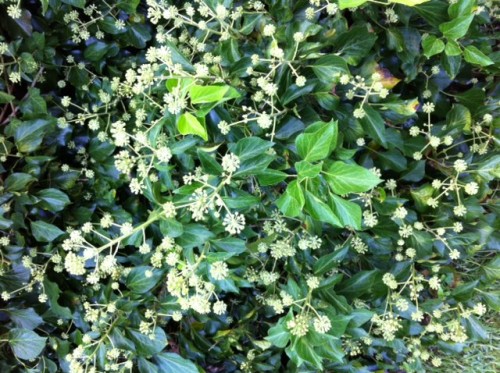
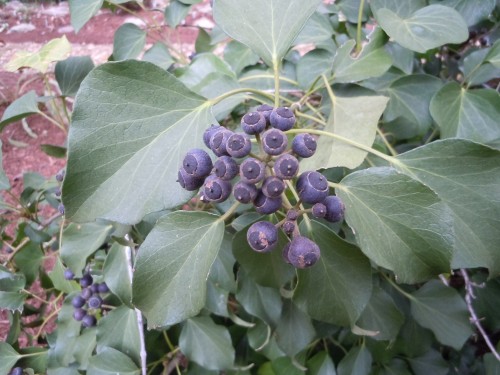
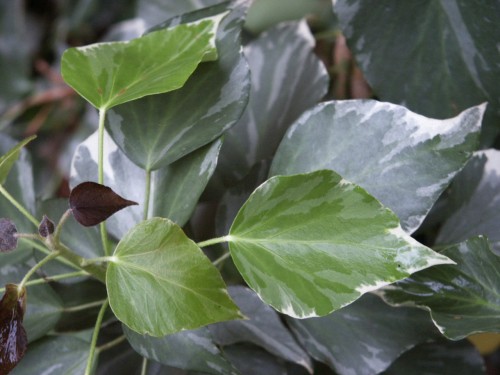
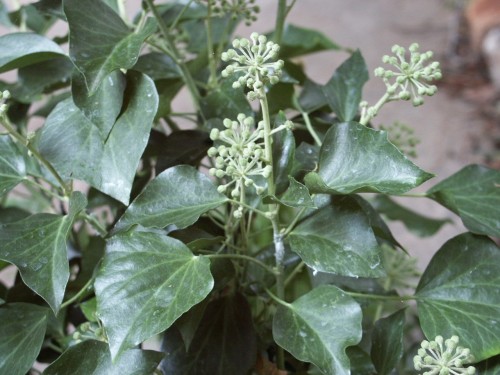
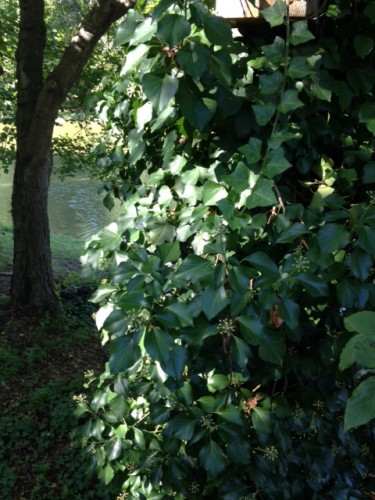
English ivy (Hedera helix) has two distinct life phases. The familiar juvenile form—lobed leaves, climbing habit—eventually transitions to the mature (arborescent) form when it reaches vertical limits and grows horizontally. The mature form has unlobed, oval leaves and produces flowers and fruit.
| Juvenile Phase | Mature Phase |
|---|---|
| 3–5 lobed leaves | Unlobed, oval/heart-shaped leaves |
| Climbing/vining | Shrubby, horizontal growth |
| No flowers | Greenish-white umbels (fall) |
| No fruit | Blue-black berries (spring) |
The mature form is still English ivy—same genetics, same invasiveness. Birds eat the berries and spread seeds far and wide. Control methods are identical:
Don't be fooled by the different appearance. It's the same aggressive invader.
How to Successfully Propagate English Ivy from Cuttings
Eradicating English Ivy Safely for a Child with Autism
Controlling Invasive English Ivy Without Harming Trees
English Ivy Yellow Spots: Spider Mites or Overwatering
English Ivy (Hedera helix): Versatile, Air-Purifying Climber and Trailer
English Ivy: Growing, Controlling, and Safely Enjoying This Classic Vine
English Ivy Control: From Manual Removal to Chemical Strategies
English Ivy Decline Under Walnut Trees: Causes & Solutions
Managing English Ivy on Trees and Brick Walls
English Ivy (Hedera helix) Care: Classic Trailing Vine
English Ivy (Hedera helix): Care, Toxicity Myths & Versatile Growth
Removing English Ivy from Trees: A Labor-Intensive but Necessary Task
Copyright © www.100flowers.win Botanic Garden All Rights Reserved