


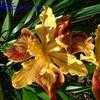
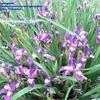

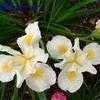
The species Iris douglasiana—commonly called Pacific Coast Iris or Pacifica—is a cornerstone of the magnificent Californian iris flora. Collected by Herbert in 1841, this beardless species is the primary parent of the stunning Pacific Coast Hybrid (PCH) iris race, renowned for an unbelievable color range and intricate patterning.
I. douglasiana grows along the California and Oregon coast, in grasslands, open woods, and bluffs. Its flowers—typically lavender-blue to purple with yellow/white signals and veining—show tremendous natural variation. This variability, combined with compatibility with other Pacific Coast species (I. innominata, I. tenax, I. munzii, etc.), enabled breeders to create the PCH race: evergreen, clumping irises with flowers in every imaginable color and pattern.
Plants form dense, evergreen clumps of narrow, dark green leaves 12–24 inches tall. Flowers appear in spring (March–May) on branched stems, 2–3 inches across, typically lavender-blue with prominent yellow/white signals and dark veining. The species is remarkably adaptable: drought-tolerant once established, deer-resistant, and long-lived. It's the genetic foundation for one of horticulture's most colorful iris groups.
Sun: Full sun coastally; part shade inland. Soil: Well-drained, acidic to neutral, low fertility preferred. Water: Winter/spring moisture; dry summer dormancy. Planting: Autumn, rhizomes just below surface. Hardiness: Zones 7–9 (some forms to zone 6). Uses: Native gardens, rockeries, dry borders, PCH breeding. The pure species offers understated elegance and the genetic key to a world of hybrid color.
Sweet Iris, Dalmatian Iris (Iris pallida): The Orris Root Source
Reticulated Iris 'Harmony': Early Spring Jewel
Stinking Gladwyn (Iris foetidissima): A Species with Ornamental Seed Pods
Corn Leaf Iris (Iris bucharica): A Bulbous Species with Unique Foliage
Louisiana Iris 'Sinfonietta': Musical Grace in the Garden
Immortality Tall Bearded Iris: A Reblooming White Beauty from 1982
Yellow Flag Iris (Iris pseudacorus): A Water-Loving Native Species
Black Gamecock Louisiana Iris: A Deep Purple Cultivar from 1978
Coast Redwood (Sequoia sempervirens): Iconic Giant of the Pacific Coast
Iris 'Pacific Coast Hybrid': Drought-Tolerant Iris with Colorful Spring Blooms
Copyright © www.100flowers.win Botanic Garden All Rights Reserved