


The Siberian Iris, botanically known as Iris sibirica, is a graceful, clump-forming perennial native to Europe and Central Asia. Unlike the bearded irises, it lacks a fuzzy beard on its falls, instead displaying a delicate signal pattern. This species belongs to the Iridaceae family and is prized for its elegant, grass-like foliage and profuse late-spring blooms.
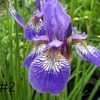
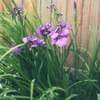
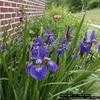
Iris sibirica produces slender, upright leaves that reach 2 to 3 feet tall, forming dense, attractive clumps. In late spring to early summer, branched stems rise above the foliage, bearing multiple flowers in shades of blue, violet, white, or occasionally pink. Each bloom is 2 to 3 inches across, with three upright standards and three cascading falls marked with a contrasting white or yellow signal.
Siberian irises thrive in moist, well-drained soil and tolerate wetter conditions better than bearded irises, making them ideal for pond edges, rain gardens, or damp meadows. They prefer full sun to partial shade and are hardy in zones 3 to 9. Once established, they are drought-tolerant and require minimal care. Divide clumps every 4 to 5 years in early spring or fall to maintain vigor.
With their vertical foliage and airy flowers, Siberian irises provide excellent structure in perennial borders, naturalistic plantings, and waterside gardens. They combine beautifully with ornamental grasses, hostas, and other moisture-loving perennials. The seed pods that follow flowering add architectural interest into autumn.
| Family: | Iridaceae (eye-rid-AY-see-ee) (Info) |
| Genus: | Iris (EYE-ris) (Info) |
| Species: | sibirica (sy-BEER-ah-kuh) (Info) |
Dwarf Crested Iris (Iris cristata): A Native Woodland Groundcover
Intermediate Bearded Iris 'Az Ap': A 1979 Ensminger Introduction
Siberian Iris 'Butter and Sugar': Classic Bicolor Elegance
Siberian Iris (Iris sanguinea): Japanese Iris, Blood-Red Species
Siberian Elm (Ulmus pumila): Tough but Troublesome Urban Survivor
Siberian Catmint (Nepeta sibirica): Hardy Perennial for Pollinators
Winter-Blooming Algerian Iris (Iris unguicularis): A Mediterranean Treasure
Sweet Iris, Dalmatian Iris (Iris pallida): The Orris Root Source
Reticulated Iris 'Harmony': Early Spring Jewel
Stinking Gladwyn (Iris foetidissima): A Species with Ornamental Seed Pods
Corn Leaf Iris (Iris bucharica): A Bulbous Species with Unique Foliage
Copyright © www.100flowers.win Botanic Garden All Rights Reserved