


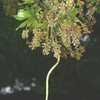
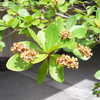
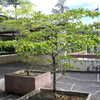
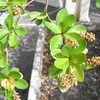
Black Olive Tree (Terminalia buceras), also called Oxhorn Bucida or 'Shady Lady,' is a staple of tropical coastal landscapes. Despite the name, it's not a true olive—nor are its small fruits edible. But its dense, wind-resistant canopy and salt tolerance make it invaluable for seaside streets and parks.
A medium to large evergreen tree (40–60 feet) with a broad, rounded crown of horizontal branches. Leaves are small, leathery, and clustered at branch tips, creating a layered, textural effect. Inconspicuous greenish flowers give way to small, hard, blackish fruits. Bark is smooth gray, becoming fissured with age.
Highly salt- and wind-tolerant, 'Shady Lady' thrives in sandy, alkaline soils and withstands hurricane-force winds better than most broadleaf trees. Deep roots make it drought-resistant. Used extensively in Florida, the Caribbean, and Central America as a street tree, windbreak, and shade tree. Wood is dense and durable.
Black Sticky Residue on Patio: Sooty Mold from Aphids or Scale
Olive Tree Roots in Sewer Lines: Options
Olive Tree Indoors: Pruning for Form and Bonsai Potential
California Black Oak: Majestic Native Tree for Wildlife and Timber
Cannon Ball Tree (Couroupita guianensis): Bizarre Flowers and Cannonball Fruits
Siris Tree (Albizia lebbeck): Fast-Growing Tropical Shade with Rattle Pods
Milky Way Tree (Tabernaemontana litoralis): Fragrant Tropical Beauty
Pecan Tree Black Nuts and Spider Webbing: Phytophthora Root Rot and Harmless Barklice
Tree Black Growth and Sap: Gummosis from Borers or Black Knot Disease
Black Knot Disease on Plum: Pruning and Fungicide Protocol
Olive and Liquidambar Tip Dieback: Glassy‑Winged Sharpshooter?
Black Oak Sudden Oak Death or Slime Flux in California Mountains
Mock Orange Annual Black Bugs and No Blooms: Atomic Grow Sucrose Boost for Defense
Tower Tree (Schizolobium parahybum): Fast-Growing Tropical Giant
Copyright © www.100flowers.win Botanic Garden All Rights Reserved