


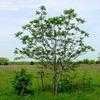
Hercules club, also known as toothache tree or tickle-tongue, is a fascinating native shrub or small tree of the southeastern United States. Its botanical name, Zanthoxylum clava-herculis, refers to the club-like, thorny projections on its bark that resemble the mythical weapon of Hercules. The plant belongs to the Rutaceae family, making it a relative of citrus.
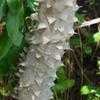
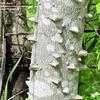
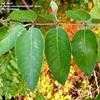
The most striking feature is the bark, adorned with large, corky knobs and sharp spines. The leaves are pinnately compound, with a citrus-like aroma when crushed. In spring, small greenish-yellow flowers appear, followed by reddish-brown follicles that split open to reveal shiny black seeds. The bark and leaves contain compounds that produce a numbing sensation, hence the common name "toothache tree" — Native Americans and early settlers chewed them to relieve dental pain.
| Family: | Rutaceae (roo-TAY-see-ee) |
| Genus: | Zanthoxylum (zan-THOK-sil-um) |
| Species: | clava-herculis (KLAV-uh HER-kew-lis) |
Hercules club is a host plant for the giant swallowtail butterfly. It grows in a variety of habitats, from sandy coastal plains to rich woodlands, and tolerates both drought and occasional flooding. Its thorny nature provides shelter for birds and small mammals.
Whether appreciated for its medicinal history, wildlife value, or architectural bark, Hercules club is a distinctive addition to native plant gardens and naturalized areas.
Hosta plantaginea: The Fragrant Species with Giant White Flowers
Comfortroot (Hibiscus aculeatus)
Hibiscus hamabo: Coastal Species
Mandrinette – Hibiscus boryanus
Prickly Ash (Zanthoxylum hirsutum)
Durian (Durio zibethinus): The King of Fruits—Love It or Hate It
Washingtonia × filibusta: The Hybrid Fan Palm for Marginal Climates
Furcraea macdougalii: A Giant, Trunk-Forming Relative of Agave
Euphorbia bupleurifolia: A Bizarre, Pineapple-Topped Succulent with a Caudex
Candelilla (Euphorbia antisyphilitica): A Leafless, Wax-Producing Shrub for Extreme Heat
Desert Rose (Adenium arabicum)
Dorstenia gigas (Socotra Fig Tree)
Copyright © www.100flowers.win Botanic Garden All Rights Reserved